

Choosing the right mounting method is critical for the performance, cost, and longevity of a solar PV system. This article compares three common installation types - roof-mounted, ground-mounted, and carport/canopy systems - to help installers, project developers, and homeowners make informed decisions.
1. Roof-Mounted Solar Systems
Structure & Working Principle
Roof-mounted systems attach solar panels directly to residential or commercial rooftops using rails, hooks, or ballasted trays. Panels are typically tilted at 10–15 degrees for flat roofs or flush-mounted on pitched roofs.
Application Scenarios
Residential homes (tile, metal, or flat roofs)
Commercial and industrial buildings with limited land
Urban areas where ground space is unavailable
Advantages
Maximizes unused roof space
Lower land cost (no extra land purchase required)
Often easier permitting for residential projects
Can reduce building cooling load by shading the roof
Disadvantages
Limited by roof orientation, pitch, and structural capacity
More complex installation on certain roof types (e.g., clay tiles)
Maintenance and cleaning require roof access and safety measures
Future re-roofing requires panel removal and reinstallation
Product Advantages (Longsun Green)
Longsun Green offers lightweight, pre-assembled roof mounting systems with corrosion-resistant materials (Al6005-T5 & SUS304), compatible with most tile and metal roof types.
Case Example
A 10-kW residential system in California using Longsun Green's roof hooks was installed in one day, withstanding 140 km/h wind loads and providing 15,000 kWh annually.

2. Ground-Mounted Solar Systems
Structure & Working Principle
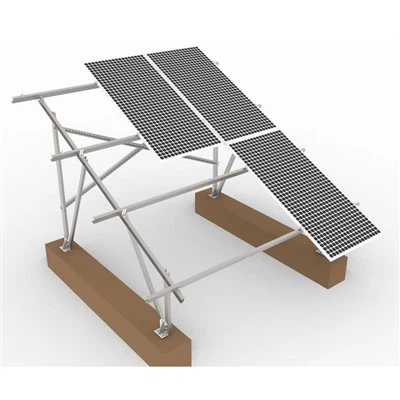
Ground-mounted systems use driven piles, concrete foundations, or screw anchors to support aluminum or galvanized steel racks. Panels are typically arranged in rows with optimized tilt angles (15–35 degrees) for maximum year-round yield.
Application Scenarios
Large-scale utility solar farms
Rural or suburban homes with ample land
Agricultural solar (agrivoltaics) combining farming and generation
Advantages
Full control over orientation and tilt for optimal energy production
Easier maintenance and cleaning at ground level
No roof structural or waterproofing concerns
Can be designed for dual-use (e.g., grazing or crop production beneath)
Disadvantages
Requires dedicated land area
Higher civil works cost (foundations, trenching, fencing)
Longer permitting and environmental review process
Vegetation management required to avoid shading
Product Advantages (Longsun Green)
Longsun Green's ground mounting systems feature hot-dip galvanized steel (80μm) and modular designs, supporting both small residential arrays and multi-megawatt solar farms.
Case Example
A 5-MW solar farm in Texas utilized Longsun Green's ground screw system, reducing foundation time by 40% and achieving a 25-year design life with zero structural issues after two hurricane seasons.

3. Solar Carport & Canopy Systems
Structure & Working Principle
Solar carports elevate panels above parking areas using single or double-post steel structures. Panels provide shade while generating electricity, often integrated with EV charging stations.
Application Scenarios
Commercial parking lots (retail, offices, hospitals)
Residential driveways and apartment complexes
Public facilities like airports and transit centers
Advantages
Dual use of space: parking + energy generation
Protects vehicles from sun, hail, and rain
Highly visible corporate sustainability statement
Can be combined with EV chargers for added value
Disadvantages
Higher upfront cost per watt compared to ground or roof systems
Requires stronger steel structures (increased material cost)
More complex foundation and drainage design
Shading between rows can reduce output if poorly designed
Product Advantages (Longsun Green)
Longsun Green's PV carport systems use heavy-duty hot-dip galvanized steel, support up to two cars per span, and are compatible with both framed and thin-film modules. Custom colors (silver or black) are available.
Case Example
A 250-kW carport system installed at a corporate campus in Germany provides shade for 80 parking spaces, generates 280 MWh annually, and powers 20 EV charging stations.

Summary Comparison Table
| Aspect | Roof-Mounted | Ground-Mounted | Carport/Canopy |
|---|---|---|---|
| Land Use | No extra land | Dedicated land | Dual-use (parking) |
| Cost per Watt | Medium | Low (large scale) | High |
| Maintenance | Difficult (roof access) | Easy | Medium |
| Energy Yield | Limited by roof | Optimizable | Moderate |
| Best For | Urban/residential | Rural/utility | Commercial/EV |
Conclusion
Each mounting method serves different needs. Roof-mounted systems are ideal for space-constrained urban sites. Ground-mounted systems offer the highest yield and easiest maintenance for large projects. Carport systems provide excellent dual-use value, especially when paired with EV charging.
For any solar mounting project, selecting a reliable supplier like Longsun Green ensures structural safety, long-term durability, and compliance with international standards.
Longsun Green – Professional Solar Mounting Solutions
📧 amber@longsungreen.com
🌐 www.longsungreen.com