

Singapore Accelerates Energy Transition: Imported Renewables to Outpace Local Solar by 2035
Singapore is moving decisively toward a greener energy future, with imported renewables expected to play a larger role than local solar power by the mid-2030s.
According to projections from the Energy Market Authority (EMA), Singapore's electricity demand is forecast to grow at an average annual rate of 2.8% to 3.2% over the next decade. Based on actual consumption of approximately 57 TWh in 2024, demand could reach around 68 TWh by 2030 and 78.9 TWh by 2035, assuming a median growth rate of 3.0%. Key drivers include sustained economic expansion, population growth, and the rapid development of energy-intensive data centers.
Solar Power: A Supporting Role, Not the Main Source
As of the first half of 2025, Singapore's total installed generation capacity stood at about 13.3 GW, with natural gas accounting for 93.1%. While solar capacity exceeded 1.5 GWp in 2024 and is targeted to reach 2–3 GWp by 2030, the country's energy mix will remain dominated by other sources. Thermal power capacity is expected to add another 1.8 GW during the same period.
Assuming a solar capacity factor of 20%, solar generation would rise from approximately 2% of Singapore's electricity supply (0.9 TWh) in 2023 to about 6% (5.1 TWh) by 2035. However, the backbone of future supply will not be local generation but imported green electricity.
The Four Switches Strategy
By 2035, renewable energy is projected to account for 40% of Singapore's electricity mix, a sharp increase from just 4% in 2022. Currently, natural gas fuels roughly 90% of the grid to meet rising demand, contributing to rising carbon emissions from the power sector.
Given limited local renewable resources, land constraints, and high population density, Singapore has been unable to grow renewable generation fast enough to keep pace with demand. Regional grid interconnection and a diversified portfolio of imported renewables are therefore critical to decarbonizing the power sector, meeting net-zero targets, and enhancing energy security.
Even if Singapore fully develops its theoretical solar potential of 8.6 GW by 2050-generating an estimated 15 TWh annually at a 20% capacity factor-that would still satisfy only about 12% of total projected national electricity demand.
Floating solar farms on major reservoirs are expected to generate electricity at a levelized cost of approximately SGD 0.097 per kWh. By 2030, the lowest generation cost is projected to fall between SGD 0.042 and 0.056 per kWh. In comparison, Singapore's recent Uniform Singapore Energy Price (USEP) has ranged from SGD 0.08 to 0.11 per kWh, indicating that local solar remains relatively expensive.

Regional Power Interconnection
Singapore is already importing up to 100 MW of hydropower from Laos under an agreement originally set to expire in 2024. That agreement is now being extended by two to five years, with import capacity increasing to 300 MW.
As part of the government's Four Switches energy strategy, the following cross-border renewable import projects have been approved:
| Source | Capacity |
|---|---|
| Indonesia | 2 GW |
| Cambodia | 1 GW |
| Vietnam | 1.2 GW |
| Australia (AAPowerLink / Sun Cable) | 1.75 GW |
Projects pending approval include:
| Source | Capacity |
|---|---|
| Peninsular Malaysia (second interconnection) | Up to 2 GW |
| Sarawak, Malaysia (hydropower) | 1 GW |
These projects are scheduled to come online progressively by 2035. Under current plans:
Local solar generation would grow from less than 1 TWh in 2023 to approximately 5 TWh (6% of supply) by 2035.
Cross-border renewable imports would reach about 26 TWh, accounting for 30% of supply.
Total renewable share would reach approximately 40%.
If Singapore aims to align with a pathway toward net-zero emissions for its power sector by 2045, the country would need to double its 2035 renewable import capacity target from approximately 4.2 GW to 8.1 GW. Such an expansion could reduce per capita carbon emissions from the power sector by 52% to 58% by 2035, while also lowering dependence on imported natural gas and reducing exposure to volatile international energy prices.
The Australia Connection: AAPowerLink
In 2019, SunCable announced plans to build a 10 GWp solar farm in Australia's Northern Territory and connect it to Singapore via subsea cables. The project has now entered the development phase, with estimated investment ranging from AUD 20 to 40 billion.
In August 2024, the Australian federal government granted environmental approval for the Australia-Asia PowerLink (AAPowerLink). In October 2024, EMA issued a conditional import license to SunCable. However, due to various factors including shareholder disagreements, the final investment decision (FID) has been postponed to 2027.
Sources: Energy Market Authority (EMA) of Singapore, industry reports

About Longsun Green
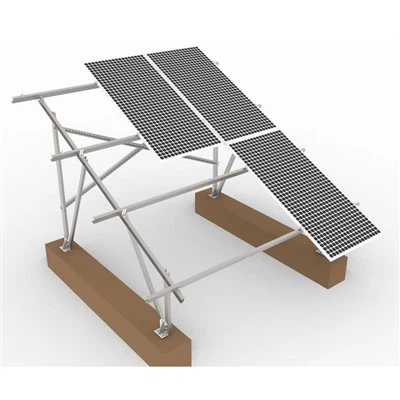
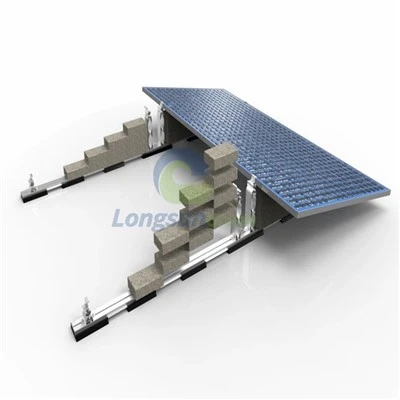
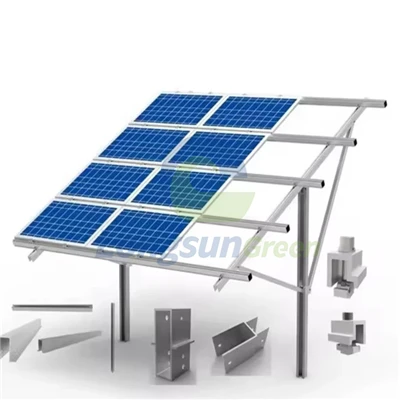
Longsun Green is a professional manufacturer of solar PV mounting structures, including adjustable hooks, tile roof systems, metal roof clamps, and ground mounts. With ISO 9001/14001/45001 certification, a 15-year product warranty, and a monthly production capacity of 100 MW, Longsun Green serves over 80 EPCs and installers worldwide. As Southeast Asia's solar market expands, reliable mounting solutions remain essential for durable and efficient PV installations.
Media Contact: Amber
Email: amber@longsungreen.com
Website: www.longsungreen.com