

Solar racking-also called mounting systems-is the structural hardware that holds PV modules in place on roofs, the ground, poles, or carports. A good rack does four things:
Transfers loads (weight, wind uplift, snow, seismic) into the building or foundation,
Positions modules at the correct tilt, spacing, and alignment,
Protects the roof envelope (flashing and waterproofing) or ground interface,
Provides bonding/grounding and wire management for a code-compliant, serviceable array.
Racking is not just "metal rails"-it's an engineered system of attachments, clamps, fasteners, and accessories that must match roof type, climate, codes, and module specs.
Core Components (What's In The Box)
Attachments: The anchor points into structure (e.g., flashed L-feet on shingle roofs, seam clamps on standing-seam metal, tile hooks on clay/concrete tile, purlin brackets on corrugated metal, or foundations/piles for ground mounts).
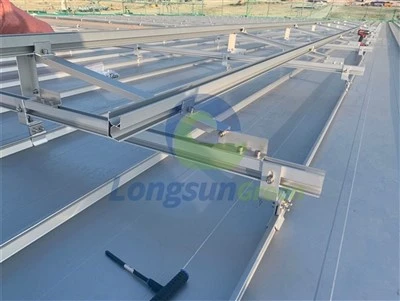
Rails or Rail-less Feet: Aluminum rails span between attachments; rail-less systems clamp modules directly to mounts to save parts/weight.
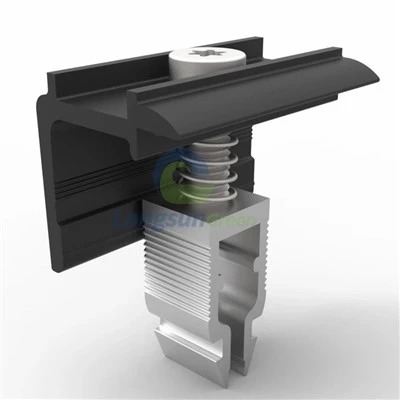
Module Clamps: Mid clamps between modules and end clamps at array edges; must sit within the module's approved clamp zones.
Bonding/grounding hardware: Integrated bonding teeth or separate lugs that tie all metallic parts to the equipment grounding conductor.
Wire management: UV-rated clips, channels, and conduit entries to keep conductors shaded, strain-relieved, and protected.
Accessories: Skirts, snow guards, rail splices, tilt legs, wind deflectors, walkway kits, and labeling.
Roof Racking, Ground Mounts & Beyond
Roof Racking
Asphalt/Composite Shingle: Flashed, lag-bolted attachments into rafters. Flashing-not caulk-is the primary waterproofing.
Standing-Seam Metal: Non-penetrating seam clamps grip the seam; allow for thermal expansion.
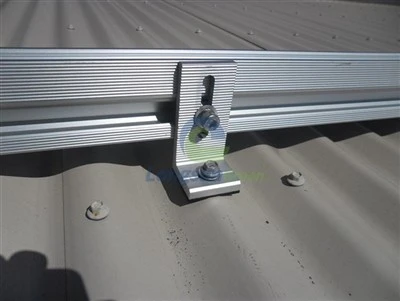
Corrugated/Trapezoidal Metal: Crest-mounted brackets with EPDM/butyl gaskets into purlins.
Tile (Clay/Concrete): Never load tile itself-use tile hooks or replace-tile flashings anchored to structure.
Low-Slope Membranes (TPO/PVC/EPDM): Ballasted (weight-based) or mechanically attached stanchions with welded boots; coordinate with the roofer for warranty.
Ground & Specialty
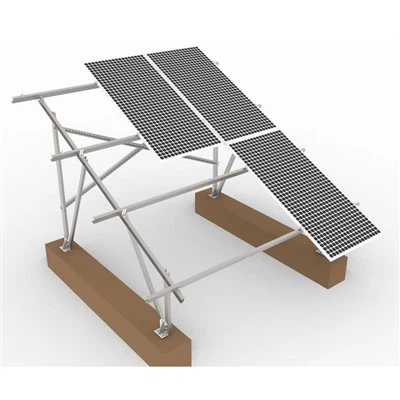
Fixed-Tilt Ground Mounts: Posts in concrete or driven piles support rails at a set tilt-great for easy access and cooling.
Pole Mounts: Small arrays on single steel poles with seasonal tilt adjustment.
Trackers: Single-axis (and rarely dual-axis) structures that follow the sun for higher yield-common in utility scale.
Carports/Canopies: Structural steel frames that provide shade and generation; engineering and drainage are central.
Rail-Based vs Rail-less vs Ballasted
Rail-Based: Most common; fast alignment, flexible layouts, strong wire management; slightly more material.
Rail-less: Fewer parts, lighter shipping; tighter tolerances and leveling.
Ballasted (flat roofs): Uses weight instead of penetrations; demands structural review for dead load, wind, and roof membrane protection.
Materials & Corrosion
Racking is typically extruded aluminum with stainless fasteners-light, strong, corrosion-resistant. On steel structures, use galvanic isolation (nylon/stainless washers, isolation pads) to avoid dissimilar-metal corrosion. Coastal or industrial atmospheres may require upgraded finishes, fasteners, and maintenance intervals.
Loads, Span Tables & Edge Zones
Racking must be sized to wind, snow, and seismic conditions. Manufacturers publish span tables for attachment spacing and rail sizing by exposure category and building height. Arrays see higher pressures in edge and corner zones near eaves/ridges/gables; attachments are denser there. Long rails need expansion joints; modules need standoff (≈25–100 mm) for cooling and drainage.
Codes, Listings & Compatibility
Structural & Fire: Local building code governs loads and roof access pathways/setbacks for firefighting.
Electrical: Racking with integrated bonding is typically listed (e.g., UL 2703 or regional equivalents). Bonding paths, labeling, and rapid shutdown (where required) must be addressed.
Module Compatibility: Clamp locations and bolt-through holes must match the module's installation manual. Do not drill frames or glass-this voids certifications and warranties.
Installation Workflow (High-Level)
Assessment & Design: Verify roof life, structure (rafter/truss/purlin layout), loads, and interconnection. Lay out the array with firefighter setbacks and wire paths.
Attachments: Find structure, flash first, then fasten to torque spec.
Rails / Rail-less mounts: Square, level, splice, and bond; respect cantilevers and expansion.
Modules: Place, align, and clamp within approved zones; torque evenly.
Bonding & Wiring: Land grounding, clip conductors under the array, form drip loops, use listed roof boots.
QA & Documentation: Torque logs, photos of attachments and serials, as-built layout, labels; final mechanical shake-test and waterproofing check.
Why Racking Quality Matters
Durability: Correctly engineered and installed racks survive decades of storms without loosening, rattling, or leaking.
Production: Proper tilt/row spacing reduces self-shading; standoff promotes cooling (lower cell temps, higher output).
Serviceability: Clean wire routes, accessible junctions, and modular clamps speed future maintenance.
Aesthetics: Low-profile edges, skirts, and consistent row planes create a professional look-important for curb appeal and customer satisfaction.
Common Mistakes (And How To Avoid Them)
Anchoring to sheathing instead of structure → pull-outs and leaks. Always lag into rafters/purlins and document embedment.
Relying on caulk instead of flashing → short-lived waterproofing. Flash first; sealant second.
Clamping outside module zones → glass stress and warranty issues. Follow the module diagram.
Ignoring thermal movement → rail warping, fastener fatigue. Add expansion splices and cable slack.
Poor wire management → UV-brittled ties, abrasion, animal damage. Use UV-rated stainless clips and shaded routes.
Corrosion coupling → premature rust. Isolate dissimilar metals and select coastal-rated hardware where needed.
FAQs
Is racking universal or brand-specific?
Most racking is module-agnostic but requires the module's clamp zones to be compatible. Always verify with both manuals.
Do panels have holes for bolt-through?
Framed modules usually include factory holes/slots on the back frame, but many rooftop systems use edge clamps only. Never drill new holes.
Can I avoid roof penetrations?
Yes on standing-seam metal (seam clamps). On other roofs, use flashed penetrations; some flat roofs allow ballasted racks with a structural check.
What tilt is best?
Whatever meets your energy target and roof geometry. On roofs, the existing pitch plus proper orientation often suffices; ground mounts can optimize tilt and azimuth.
How long does racking last?
Quality aluminum/stainless systems routinely match or exceed module life (25+ years) when installed per spec and kept free of standing water and galvanic attack.