

As the world accelerates its transition toward zero-carbon energy sources, solar power stands at the forefront of this global shift. Sunlight, the largest renewable energy source on Earth, delivers approximately 6,000 times more energy to our planet each year than the world's primary energy needs. This article explores the multifaceted benefits of solar energy-from structural principles and functional mechanisms to diverse applications, product advantages, and real-world success stories.
1. Structural Principles and Functional Mechanisms
How Solar Panels Work
Solar photovoltaic (PV) technology converts sunlight directly into electricity through the photovoltaic effect. When sunlight strikes the semiconductor material within a solar cell, electrons are knocked loose, generating an electrical current. This direct current (DC) is then converted to alternating current (AC) through inverters, making it suitable for powering buildings, machinery, and the electrical grid.
Beyond PV technology, solar thermal systems absorb sunlight and store it in a fluid for heating applications, offering another pathway for harnessing solar energy.
The Role of Mounting Structures
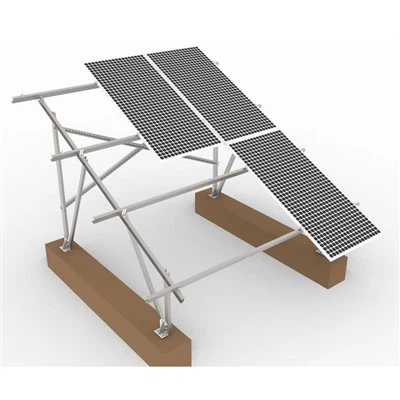
The effectiveness of any solar installation depends heavily on its mounting structure-the physical framework that secures panels to rooftops, ground surfaces, or specialized structures. A well-designed mounting system serves three essential functions:
Panel Positioning: Holds modules at the optimal angle and orientation for maximum sunlight exposure
Load Transfer: Transfers all mechanical loads (panel weight, wind forces, snow accumulation) safely to the supporting structure
Electrical Grounding: Provides a continuous grounding path for the entire array
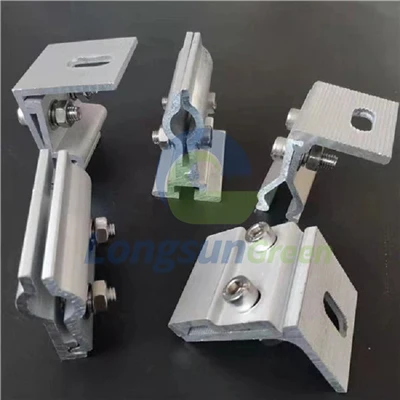
Mounting structures typically consist of rails, clamps, attachment feet, and fasteners. Material selection-whether aluminum, stainless steel, or galvanized steel-significantly affects cost, weight, corrosion resistance, and lifespan.
Optimal Tilt and Orientation
The tilt angle and orientation of solar panels are critical variables for maximizing energy capture. Research demonstrates that optimal tilt angles vary significantly by latitude zone:
High-Latitude Zones (above 45°): The annual optimum tilt is steeper, facing perpendicular toward the equator. The sun's position is more concentrated in one orientation, making a single roof surface ideal as a "solar envelope."
Mid-Latitude Zones (20°–45°): A balanced approach works best, with seasonal adjustments recommended for maximum yield.
Low-Latitude Zones (0°–20°): The sun's position is more distributed across multiple orientations. Monthly adjustments to tilt angle can capture significantly more energy, and multiple roof surfaces can collectively function as solar envelopes.
The rule of thumb-slope close to the latitude, facing the equator-remains a reliable starting point for most installations.
2. Applications Across Sectors
Residential and Commercial Rooftops
Building-attached photovoltaics (BAPV) and building-integrated photovoltaics (BIPV) represent two primary approaches for rooftop installations. BAPV systems rest on existing roof structures as separate components, while BIPV replaces conventional building materials entirely, serving dual functions as both building envelope and energy producer.
Flush-mount systems are the most common residential solution, installing panels parallel to pitched roofs with a small air gap for ventilation. For flat or low-slope roofs, tilted or ballasted systems allow optimal tilt angles regardless of roof pitch.

Large-Scale Solar Farms
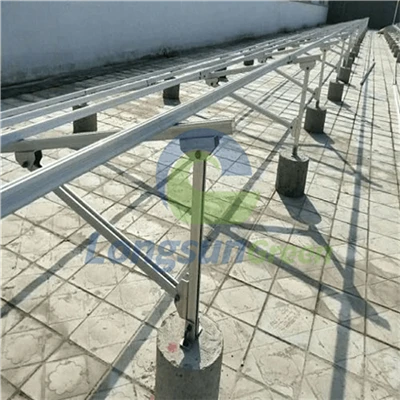
Ground-mounted systems are the backbone of utility-scale solar development. Fixed-tilt systems offer simple, low-maintenance operation with latitude-based tilt angles (±5°) for maximum sunlight exposure. Single-axis tracking systems can achieve 15–30% higher energy yields by following the sun's movement throughout the day.
The U.S. Department of Energy estimates that meeting solar growth targets through 2035 will require approximately 5.7 million acres of land, much of which could come from repurposed agricultural fields or marginal lands.
Agrivoltaics: Dual-Use Land
Agrivoltaic systems combine solar power generation with agriculture, allowing farming to continue beneath elevated solar structures. This approach maximizes land productivity in regions with limited arable land and creates additional revenue streams for farmers.
Key features of agrivoltaic systems include:
Clearance heights of 2 meters or more, allowing farm machinery to operate freely
Optimized panel spacing (20–30 cm) for light transmission to shade-tolerant crops
Protection of crops from excessive heat and reduced water evaporation
Research from Baghdad demonstrates that solar-powered greenhouse cultivation yields significantly higher productivity (over 1,300g per plant versus 250g in open-field conditions) with a payback period of less than three years and 40–60% improvement in water-use efficiency.
Bifacial Vertical Panels
An emerging innovation, bifacial vertical solar panels offer distinct advantages in space-constrained environments. Installed at 90 degrees, these panels capture sunlight from both sides and generate power throughout the day rather than at a single midday peak. Studies show vertical panels can offer up to 11% more energy than horizontal alternatives, and with tracking capabilities, the yield climbs to 27%.
Vertical panels are particularly well-suited for agrivoltaic projects, as they allow standard farming operations to continue between panel rows. Crops like potatoes, hay, carrots, and saffron thrive in these configurations.
Solar Carports
Solar carports provide dual functionality: shade and weather protection for vehicles while generating clean electricity. Designed for parking lots, commercial zones, and residential areas, these systems must be engineered for heavy loads-including snow, wind, and vehicle weight-and can be customized for height and layout based on specific requirements.
3. Product Advantages
Non-Penetrating Roof Solutions
For installations where preserving roof integrity is paramount, non-penetrating mounting systems offer significant advantages. By using ballasted or clamp-based attachments that secure panels without drilling or puncturing the roof surface, these systems:
Eliminate Leak Risks: No penetrations means no potential water entry points
Preserve Warranties: Building owners can maintain their roof warranties without voiding them
Enable Fast Installation: Minimal hardware and no drilling drastically reduce labor time and costs
Offer Flexibility: Systems can be reconfigured or removed without leaving permanent damage

Material Excellence
High-quality mounting systems utilize premium materials designed for 25+ years of service life:
| Material | Properties | Best Application |
|---|---|---|
| AL6005-T5 Aluminum | Lightweight, corrosion-resistant, anodized finish | Standard rooftop and carport systems |
| SUS304 Stainless Steel | Exceptional corrosion resistance, high strength | Coastal and high-corrosion environments |
| ZAM Steel | High strength, extended lifespan | Heavy-load and industrial applications |
| Hot-Dip Galvanized Steel | Cost-effective, durable | Large-scale ground-mounted projects |
Engineering for Extreme Conditions
Professional mounting systems are engineered to international standards (AS/NZS 1170, DIN, JIS, ASCE 7) and can be designed to withstand:
Wind loads up to 60 m/s (Grade 12+ typhoon resistance)
Snow loads up to 1.6 kN/m²
Seismic forces in earthquake-prone regions
This robust engineering ensures reliable performance across diverse climates and geographic conditions.
4. Real-World Success Stories
Healthcare Sector: Swansea Bay University Health Board
The UK's first hospital-owned solar farm, a 4 MW installation located near Morriston Hospital in Wales, went live in October 2021. The facility features 10,000 ground-mounted panels designed to supply approximately 20% of the hospital's annual electricity needs. The impact has been substantial:
1,000 tCO₂e saved annually
£500,000 in annual cost savings
30,000 kWh surplus exported to the grid in the first four months
Even during winter months, the hospital has achieved 55 hours without needing electricity from the National Grid.
Public Sector: Matrix House, Swansea
The NHS Wales Shared Services Partnership installed a 137 kW rooftop solar PV system at Matrix House in Swansea, featuring 224 panels of 615 watts each. The system generates approximately 116,476 kWh of electricity per annum and has already achieved days where generation exceeds building consumption, exporting surplus power to the grid. The project was approved as a permitted development rather than requiring full planning permission, streamlining the implementation process.

5. Research Insights and Future Outlook
Ecological Benefits
Recent research from Argonne National Laboratory demonstrates that solar farms, when approached with care, can actively benefit local ecosystems. Monitoring two Minnesota solar farms located on retired agricultural land and restored with native wildflowers and grasses revealed:
Significant growth in flowers and native plants
Beneficial insect populations tripled
Bee populations grew 20-fold in number
Insects migrated to nearby farmland, pollinating crops
This finding is particularly significant as meeting renewable energy targets will require approximately 10 million acres of land. By transforming decommissioned agricultural fields into pollinator-friendly environments, solar farms can support insect conservation while enhancing agricultural productivity.
Modular Systems and Scalability
Modular solar systems offer unprecedented flexibility for projects of all sizes. Each power generation unit operates independently with its own MPPT (Maximum Power Point Tracking) controller, eliminating the "short board effect" where one shaded panel limits the output of an entire string. Key advantages include:
Angle adaptability: Supports 0° flat-lay to 90° facade installation
Multi-orientation layout: Allows south, east, and west mixed installation, increasing total annual generation by approximately 15%
Shading resilience: Local shading affects only the shaded module, with total system efficiency loss controlled within 3%
Scalable capacity: Systems can start from as little as 800W (two panels) and expand one module at a time
Conclusion
Solar energy offers far more than clean electricity generation. When thoughtfully designed and properly installed, solar systems deliver a comprehensive array of benefits:
Environmental: Zero greenhouse gas emissions, minimal water usage, and potential ecosystem restoration
Economic: Reduced operating costs, revenue from surplus energy export, and rapid payback periods
Structural: Compatible with diverse roof types, available in non-penetrating configurations, and engineered for extreme weather
Social: Dual-use land applications, support for agricultural productivity, and contribution to energy independence
As the industry continues to innovate-from bifacial vertical panels to agrivoltaic systems-the potential for solar energy to address multiple global challenges simultaneously becomes increasingly clear. The mounting structure, often the most overlooked component of a solar system, plays a critical role in unlocking this full potential, ensuring that panels perform optimally, safely, and durably for decades to come.

Longsun Green is a specialized manufacturer of solar mounting systems, committed to delivering high-quality, reliable solutions for photovoltaic projects worldwide. With 17+ years of expertise and products deployed in over 10 GW of installations, we provide end-to-end support from design to after-sales.
Media Contact: Email: amber@longsungreen.com | Website: www.longsungreen.com