

Understanding How Solar Owners Get Paid and Save on Electricity Bills
1. Introduction
For residential and commercial solar system owners, one question matters most: How do I get paid for the electricity my system generates?
The most common grid-tied solar model worldwide is "Self-Consumption + Surplus Feed-in" (also known as net billing or feed-in tariff with self-use). This model allows owners to use solar electricity directly, sell excess power to the grid, and dramatically reduce electricity bills.
This guide explains the settlement mechanism, calculation methods, and step-by-step in clear, practical terms.
2. What Is "Self-Consumption + Surplus Feed-in"?
| Term | Definition |
|---|---|
| Self-Consumption | Electricity generated by your solar system that you use immediately in your home or business. |
| Surplus Feed-in | Electricity your system generates but you do NOT use immediately; it flows automatically to the utility grid. |
| Settlement | The utility company measures how much you consumed from solar vs. exported, then calculates your bill credit or payment. |
Simple analogy: Your solar system is like a small power plant on your roof. First, it supplies your own needs. Anything extra is "sold" to your neighbors through the grid.
3. Key Commercial Parameters
3.1 Retail Electricity Rate (Import Price)
The price you pay to buy 1 kWh from the grid
Typically $0.10 – $0.35/kWh depending on country and time-of-use
Higher rates make self-consumption more valuable
3.2 Feed-in Tariff (Export Price)
The price the utility pays you for 1 kWh of surplus solar electricity
Usually lower than retail rate (e.g., retail $0.15 → FiT $0.05–0.10)
Some countries offer net metering (1:1 credit – retail = export price)
3.3 Net Metering vs. Net Billing
| Model | Export Credit | Typical Location |
|---|---|---|
| Net Metering | 1:1 – export credited at full retail rate | US (some states), Canada, parts of Asia |
| Net Billing | Export credited at lower feed-in tariff | Europe, Australia, China, most of world |
Net metering is more favorable to solar owners because every kWh exported offsets a kWh purchased at the same price.
4. Step-by-Step Settlement Process
Phase 1: Before Installation
Check local regulations – What is the feed-in tariff rate? Is net metering available?
Apply for grid connection – Submit system size, inverter specs, single-line diagram
Utility approval – Utility confirms technical feasibility and meter requirements
Phase 2: Installation & Metering
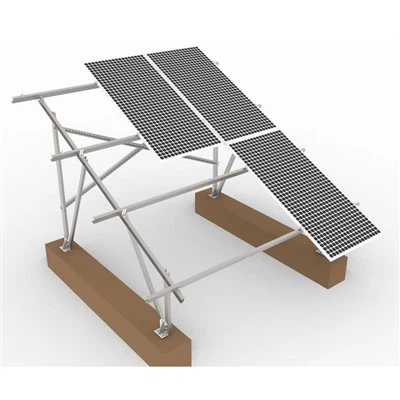
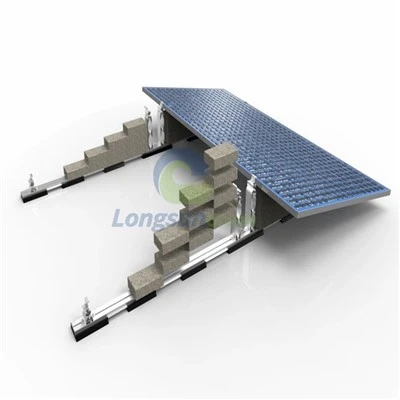
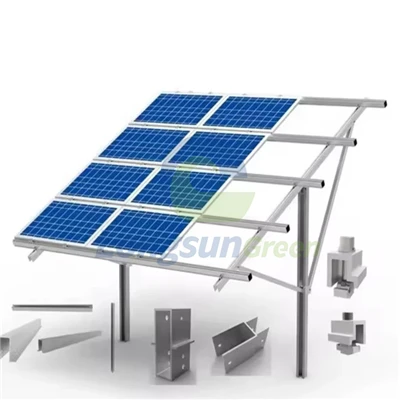
Install solar system – Panels, inverter, racking (Longsun Green mounting solutions)
Replace or configure meter – Install bi-directional (import/export) meter
Utility inspection – Safety and compliance check
System commissioning – Permission to operate granted
Phase 3: Operation & Billing
Meter records data – Typically every 15–30 minutes or monthly
Utility calculates – Import kWh, export kWh, net consumption
Bill generation – Monthly or bi-monthly statement showing:
Total solar generation
Self-consumption (calculated, not directly measured)
Surplus export
Savings and credit
Payment or credit carryover – Excess credits may roll to next month or be paid out annually
Phase 4: Annual True-up (Some Markets)
In net metering systems, an annual true-up reconciles cumulative credits
Excess credits may be paid at a lower "avoided cost" rate
Some utilities reset credits to zero annually

5. Practical Example – Residential System
System: 5 kWp rooftop solar
Location: Assume net billing model (FiT = 60% of retail rate)
Monthly solar generation: 600 kWh
Monthly household consumption: 500 kWh
| Time Period | Solar Generation | Household Use | Self-Consumption | Export to Grid | Import from Grid |
|---|---|---|---|---|---|
| Daytime | 600 kWh | 300 kWh | 300 kWh | 300 kWh | 0 kWh |
| Nighttime | 0 kWh | 200 kWh | 0 kWh | 0 kWh | 200 kWh |
| Total | 600 kWh | 500 kWh | 300 kWh | 300 kWh | 200 kWh |
Financial Calculation:
| Item | Calculation | Amount |
|---|---|---|
| Retail rate | $0.15/kWh | - |
| Feed-in tariff | $0.09/kWh | - |
| Savings from self-consumption | 300 kWh × $0.15 | $45 saved |
| Income from export | 300 kWh × $0.09 | $27 earned |
| Cost of grid import | 200 kWh × $0.15 | $30 paid |
| Net bill without solar | 500 kWh × $0.15 | $75 |
| Net bill with solar | $30 – $27 – $45? Let me correct: | |
| Correct calculation: | ||
| Grid import cost | 200 kWh × $0.15 = $30 | |
| Export income credit | – 300 kWh × $0.09 = –$27 | |
| Final bill | $30 – $27 = $3 |
Result: Monthly bill reduced from $75 to $3 – a 96% reduction.
6. Factors That Maximize Your Returns
| Factor | Impact on Self-Consumption | How to Optimize |
|---|---|---|
| Daytime load | Higher daytime usage = more self-consumption | Run appliances (washer, dryer, EV charging) during sunlight hours |
| Battery storage | Stores excess for night use | Add battery to increase self-consumption from 30% to 70%+ |
| System sizing | Oversizing may increase export (lower value) | Size system to match daytime load profile |
| Roof orientation | Affects generation timing | East-west arrays extend generation hours |
| Load shifting | Move consumption to sunny hours | Smart timers, water heating during midday |
7. Settlement Timeline by Country (Typical)
| Country | Typical Model | Settlement Frequency | Credit Carryover |
|---|---|---|---|
| USA (CA, NY, MA) | Net metering | Monthly | Annual true-up |
| Germany | Net billing | Monthly | Paid annually |
| Australia | Net billing | Quarterly | Paid quarterly |
| China | Net billing (FiT) | Monthly | No carryover |
| UK | Smart Export Guarantee | Monthly | Varies by supplier |
| India | Net metering | Monthly | Annual settlement |
8. Common Pitfalls & How to Avoid Them
| Pitfall | Consequence | Solution |
|---|---|---|
| No bi-directional meter installed | Utility cannot measure export; you get no credit | Confirm meter type BEFORE installation |
| Feed-in tariff lower than expected | Longer payback period | Get written FiT confirmation from utility |
| Self-consumption too low | Most energy exported at low FiT | Add battery or shift loads to daytime |
| Annual true-up pays at low rate | Large credits lost | Size system correctly; avoid oversizing |
| Utility approval delays | System sits idle for months | Submit application early; work with experienced installer |

9. Why This Matters for Longsun Green Customers
As a solar mounting structure manufacturer, Longsun Green focuses on the physical foundation of your PV system. However, understanding settlement models helps you:
Right-size your system – Avoid oversizing that leads to low-value export
Choose optimal orientation – East-west arrays may better match daytime load profiles
Plan for battery integration – Longsun Green's adjustable racks accommodate battery systems easily
A well-mounted system + smart consumption strategy = maximum financial return.
10. Frequently Asked Questions (FAQ)
Q1: Do I need a special meter for surplus feed-in?
Yes. A standard meter cannot measure export. You need a bi-directional or net meter.
Q2: Can I see my self-consumption in real time?
Yes, with a monitoring system (e.g., inverter app, smart meter portal).
Q3: What happens to surplus export during a power outage?
Grid-tied inverters automatically shut down for safety. No export during outages unless you have battery backup with islanding capability.
Q4: Is self-consumption always better than exporting?
Almost always, because retail rate > feed-in tariff. Prioritize using your own solar power.
Q5: Does Longsun Green help with utility applications?
We provide mounting layout drawings and structural calculations needed for permit applications. Local installers typically handle utility paperwork.
Q6: Can I switch from net billing to net metering?
Only if your utility offers both models. Check local regulations.
11. Conclusion
The "Self-Consumption + Surplus Feed-in" model is the foundation of rooftop solar economics worldwide. Understanding how settlement works empowers you to:
Maximize savings by increasing daytime self-consumption
Avoid costly mistakes (wrong meter, oversizing)
Accurately calculate payback periods
Make informed decisions about battery storage
Key takeaway: Every kWh you self-consume saves you the full retail rate. Every kWh you export earns you the feed-in tariff. Prioritize self-consumption for the best returns.
Contact Longsun Green
For structural support, mounting solutions, or technical datasheets:
📧 Media Contact: amber@longsungreen.com
🌐 Website: www.longsungreen.com
Longsun Green – Your Partner in Reliable Solar Mounting Structures