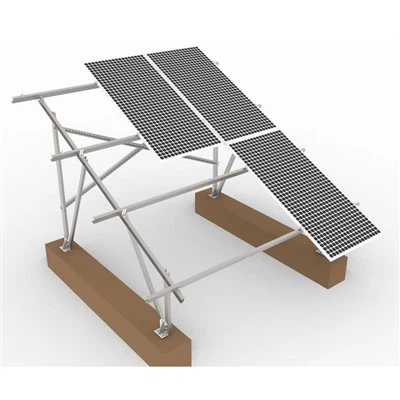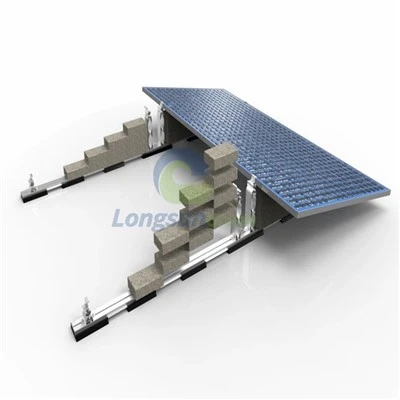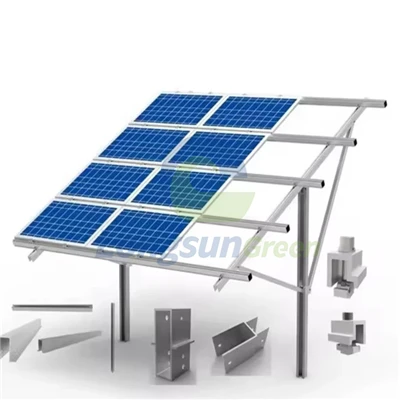


Yes-on framed modules. Most modern, framed crystalline-silicon PV modules leave the factory with pre-drilled round holes or elongated slots in the rear flanges of the aluminum frame. These are there for bolt-through mounting (and sometimes for bonding lugs).
Whether you actually use them depends on your racking: many residential/Commercial rooftop systems clamp the module edges to rails and never use the back holes. Frameless (glass-glass) modules typically do not have back mounting holes and must be clamped or mounted with a listed frameless system.
What Exactly Are Those Holes? (Anatomy Of A Module Backside)
If you flip a framed module, you'll usually see:
Mounting Holes / Slots – On the long-side (sometimes also short-side) frame flanges.
Common sizes: Ø8–9 mm (≈ M8 / 5⁄16") round holes and/or 8×12–14 mm elongated slots.
Purpose: Bolt-through to rails or brackets on ground-mounts, trackers, or certain rooftop systems.
Grounding/Earthing Hole – A small dedicated hole (often Ø4–5 mm) with a symbol nearby.
Purpose: Attach a bonding/grounding lug when the racking isn't UL 2703/IEC-listed for integrated bonding.
Weep (Drainage) Holes – Tiny openings at the bottom frame to release condensation.
Never use for mounting, never block or seal them, and keep the module orientation correct so they're at the bottom edge.
Junction Box & Leads – Center-back near the top or middle; keep this area clear for strain relief and service loops.
Do not drill new holes in the frame or glass. It almost always voids the warranty, can weaken the frame, and may compromise certifications.
Two Ways To Mount: Clamps vs Bolt-Through
1) Edge Clamping (Most Rooftop Rails)
Modules sit on aluminum rails; mid-clamps lock between modules, end-clamps secure the ends.
Pros: Fast, widely approved (UL 2703/IEC systems), excellent wire management, easy alignment.
Cons: Requires adherence to clamp zones shown in the module datasheet.
2) Bolt-Through Using Back Holes
Stainless bolts pass through the rear frame holes/slots into brackets or rails.
Common in ground-mounts, trackers, some rail-less systems, and legacy roofs.
Pros: Positive mechanical capture; sometimes fewer clamps.
Cons: More labor per module; must respect hole patterns and torque specs.
Either method is valid only if the module manufacturer allows it for your model. Load ratings (e.g., 2400 Pa wind / 5400 Pa snow) depend on the approved clamp zones or bolt hole locations used during certification.
Hardware & Torque (General Practices)
Bolts/Washers: Stainless steel M8 (5⁄16") with flat + spring (or lock) washers are typical; use isolation washers if mounting to galvanized steel to reduce galvanic corrosion.
Torque: Follow the module or racking manual (often in the 9–14 N·m / 80–125 in-lb range for M8 clamps/bolts, but check your spec).
Bonding: Use listed bonding clips/teeth in clamps or a grounding lug at the earthing hole. Racking listed to UL 2703 (or regional equivalent) typically provides a code-compliant grounding path without separate lugs.
When You Should (And Shouldn't) Use The Back Holes
Good use cases
Ground-mount / Tracker: Brackets are designed for bolt-through patterns; slots help absorb thermal expansion.
High-wind sites where the racking engineering specifies bolt-through on certain rows.
Rail-less kits that specifically interface through the frame holes (verify listing).
Avoid or reconsider
Most residential rail systems where the manufacturer requires edge clamps-don't mix methods.
Frameless modules-no holes; use frameless clamps or a factory-approved adhesive/point-support system.
Tile roofs where bolt stubs can foul tiles; clamps plus rail standoffs are cleaner.
Reading The Datasheet: Clamp Zones & Hole Patterns
Your module datasheet/installation manual shows:
Permissible clamp ranges (e.g., clamp center from 1⁄4 to 1⁄3 of the long side), sometimes multiple patterns for different load ratings.
Permitted bolt holes/slots and minimum edge distances when bolt-through is used.
Load tables indicating snow/wind ratings for each method.
Forbidden areas (near corners, too close to glass) that risk stress concentrations.
If your racking deviates from these drawings, get written approval from the module manufacturer or use a racking system with engineering letters specifically covering your module family.
Common Mistakes (And How To Avoid Them)
Drilling the frame to "add a hole."
– Don't. Use only factory holes/slots and approved clamps; drilling voids warranties.
Using weep holes as mounts.
– Those are drainage; blocking them traps moisture and can corrode frames.
Clamping outside allowed zones.
– Can crack glass or fail load tests. Verify the clamp diagram for your exact model.
Over-torquing stainless fasteners.
– Leads to distorted frames or seized hardware (galling). Use a torque wrench and appropriate anti-seize where specified.
Attaching microinverters/optimizers to the module frame without approval.
– Most makers require mounting to rails, not the module frame, unless the accessory bracket is explicitly listed.
Ignoring thermal movement.
– Use elongated slots as intended or leave expansion gaps per racking spec.
Special Cases
Glass-Glass (Frameless) Modules: No back holes; rely on edge clamps with rubber interfaces or approved point supports. Never through-drill glass.
BIPV / Building Facades: Mounting is part of a curtain wall or roofing system-follow that system's tested anchors; module holes may be irrelevant.
Thin-Film Modules: Often frameless-clamp or adhesive systems apply; check the exact product manual.
Quick FAQ
Q1: Can I add holes if my bracket doesn't line up?
No. Re-position the bracket or choose racking that matches the factory hole pattern. Drilling the frame voids certifications and warranty.
Q2: What size are the back holes?
Commonly M8/5⁄16" rounds or 8×12–14 mm slots, but verify on your module drawing.
Q3: Are the back holes always required?
No. Many rooftop systems never use them-edge clamps to rails are standard.
Q4: Do all modules have them?
Framed modules: usually yes. Frameless modules: usually no.
Q5: Can I use the earthing hole for mounting?
No. It's for grounding lugs only.