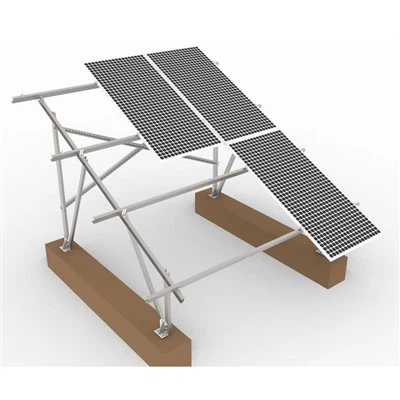


The global challenges of food security, water scarcity, and the transition to renewable energy are increasingly competing for a finite resource: land. Agrivoltaics, the co-location of agriculture and solar photovoltaic (PV) energy generation, presents a transformative solution to this conflict. This article provides an in-depth examination of the Agrivoltaic Mounting System, detailing its structural design, functional principles, diverse applications, multifaceted benefits, and real-world efficacy. We argue that advanced agrivoltaic infrastructure is not merely an alternative but a necessary evolution for sustainable land management, offering a replicable model for enhancing both energy and agricultural resilience.

1. Structural & Design Philosophy: Engineered for Coexistence
Unlike conventional ground-mounted systems that prioritize only solar density, the system is architected from the ground up for dual-purpose use. Its core design principles are elevation, strength, and adjustability.
Elevated Framework: The system employs a significantly taller and more robust substructure (typically with pile foundations) compared to standard solar mounts. The minimum ground clearance is designed to be over 2.5 meters, ensuring the unimpeded passage of large agricultural machinery such as tractors and harvesters.
Robust Material Science: The primary structural components are manufactured from high-strength steel (Q355 or equivalent), with all critical parts undergoing a hot-dip galvanization process. This provides superior corrosion resistance, ensuring a design service life of over 25 years, even in the humid, chemically rich microclimates of farms.
Modular & Pre-Assembled Design: The system utilizes a patented modular connector system, drastically reducing the number of parts and required tools for installation. Major components are pre-assembled at the factory, leading to a documented reduction of on-site labor hours by up to 50%, which minimizes installation costs and disruption to the farm.
2. Functional Principle: The Science of Optimized Symbiosis
The functionality of the system extends beyond mere electricity generation to active environmental management.
Smart Shading Optimization: The system's key innovation lies in its adjustable tilt angles. By strategically angling the PV modules, it is possible to create a dynamic shading regime. This balances the solar irradiance captured for energy with the specific photosynthetic needs of the underlying crops. For instance, partial shading can reduce heat stress and evapotranspiration in crops like lettuce and berries, leading to higher yields.
Microclimate Regulation: The PV arrays act as a physical buffer against extreme weather events, protecting crops from hail, heavy rainfall, and intense sunburn. Furthermore, the shading effect reduces soil surface temperature and moisture evaporation, which can lead to water savings of up to 20% in certain arid regions.
Dual Revenue Streams: The principle is simple yet powerful: the land produces two harvests-one of food and one of energy. Farmers can consume the electricity for on-site operations or feed it into the grid, creating a stable, additional income stream that de-risks their agricultural business.

3. Application Scenarios: Tailored for Diverse Agrosystems
The system's versatility allows for customization to suit a wide range of agricultural activities:
Viticulture and Orchards: The elevated structure is ideal for vineyards and fruit trees. The adjustable shading can be fine-tuned to improve grape quality (e.g., reducing sugar content volatility) or protect delicate fruits from sunscald.
Specialty Crops (Berries, Leafy Greens): These high-value crops often benefit significantly from partial shading. The system creates a more controlled environment, potentially extending growing seasons and improving product quality and consistency.
Livestock Grazing: Sheep and other livestock can graze freely underneath the panels. The panels provide shelter, reducing heat stress for the animals, while the animals naturally manage vegetation, reducing maintenance costs for the solar operator.
Pollinator-Friendly Habitats: The land under and around the arrays can be seeded with native pollinator plants, supporting biodiversity and benefiting nearby crops that rely on pollination.
4. Documented Advantages & Research Findings
Empirical evidence and research underscore the system's advantages:
Increased Land Efficiency Ratio (LER): Studies have shown that agrivoltaic systems can achieve a Land Efficiency Ratio of over 160%, meaning the same plot of land can deliver more than 100% of the value when used for either agriculture or solar alone.
Water Conservation: Research in arid climates indicates a reduction in irrigation needs by 15-20% due to reduced soil evaporation under the panels.
Enhanced PV Performance: Crops release water vapor, which can have a cooling effect on the PV modules. Cooler panels operate more efficiently, potentially increasing electricity output by 1-3% during peak temperatures.
Socio-Economic Resilience: By providing a second income, agrivoltaics help stabilize farm economies, making them more resilient to market fluctuations and climate variability.

5. Success Case Study: A Win-Win in Shandong, China
A 10MW installation was deployed on a 40-hectare goji berry farm in Shandong province. The project parameters and outcomes were as follows:
Challenge: The region faced high summer temperatures that stressed the goji plants, leading to reduced yields and high water costs.
Solution: The system was installed with a specific spacing and tilt angle to provide approximately 30% shading during the peak summer months.
Results:
Agricultural: Goji berry yields increased by 18% due to reduced heat stress. Water consumption for irrigation decreased by an estimated 16%.
Energy: The system generates over 13,000 MWh of clean electricity annually, enough to power over 3,000 local homes.
Economic: The farmer's total revenue increased by more than 40% through a combination of higher crop sales and income from electricity.
Conclusion
The Agrivoltaic Mounting System represents a paradigm shift in how we utilize our land resources. It is a sophisticated, engineered solution that moves beyond the competition between food and energy towards a synergistic, productive, and resilient coexistence. By integrating proven engineering with agronomic science, it offers a practical, scalable, and profitable path forward for farmers, solar developers, and the planet alike.