

1. Overview of Three Fixed Mounting Methods
Solar PV systems using fixed-tilt mounting structures fall into three primary categories. Each method has distinct structural requirements, cost implications, and performance characteristics.
| Mounting Type | Best For | Typical Scale |
|---|---|---|
| Rooftop | Residential, commercial buildings with usable roof space | 2–500 kW |
| Ground-mounted | Large-scale projects, land-rich sites | 50 kW – 10 MW+ |
| Carport | Commercial parking lots, EV charging stations | 10–500 kW |
2. Rooftop Solar Mounting (Fixed)
Structural Overview
Rooftop fixed systems attach directly to the existing roof structure using mounting brackets, rails, and flashing kits. For sloped roofs, tiles or shingles are partially lifted to install L-feet and flashing. For flat roofs, ballasted or penetrating systems are used. The tilt angle is determined by the roof pitch and cannot be adjusted after installation.
How It Works
The Waterproof PV Solar Mounting Flashing Kit (asphalt shingle application) replaces roof tiles to create a watertight seal around each mounting point. Rails span across L-feet, and modules clamp onto rails at a fixed angle matching the roof slope.
Advantages
| Advantage | Explanation |
|---|---|
| Space efficiency | Utilizes otherwise unused roof area without consuming land |
| Lower land cost | No need to purchase or lease additional land |
| Reduced cabling | Shorter DC runs from array to inverter |
| Aesthetic integration | Panels sit flush with roof, maintaining property appearance |
| Self-cleaning | Sloped roofs allow rain to naturally wash away dust |
| Cost-effective | Lowest upfront cost among three methods |
Disadvantages
| Disadvantage | Explanation |
|---|---|
| Roof age limitations | Older roofs may require replacement before installation |
| Orientation constraints | Limited to existing roof direction (south-facing ideal but not always available) |
| Complex waterproofing | Requires quality flashing kits to prevent leaks |
| Difficult maintenance | Working at heights increases safety risks and labor costs |
| Fixed tilt limitation | Cannot optimize angle for seasonal sun changes |
Ideal Application Scenarios
Residential homes with asphalt shingle or tile roofs
Commercial warehouses with large, unshaded roof areas
Buildings in urban areas where land is unavailable
Product Recommendation from Longsun Green
For rooftop projects, Longsun Green offers:
Waterproof PV Solar Mounting Flashing Kits for asphalt shingle roofs
Aluminum rails (6005-T5) with 25-year lifespan
Stainless steel clamps and L-feet with AA10 anodizing
3. Ground-Mounted Solar (Fixed Tilt)
Structural Overview
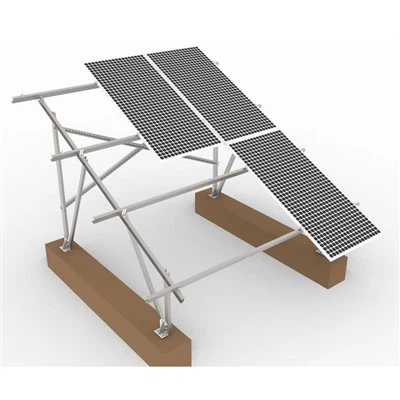
Ground-mounted fixed systems use steel or aluminum piles driven directly into the soil, with a supporting frame of rails and purlins. Foundations can be driven piles, concrete ballasts, or screw piles depending on soil conditions. The tilt angle is preset during design (typically 20–35° depending on latitude) and remains fixed for the system's life.
How It Works
Rows of piles are installed at calculated spacing. Horizontal rails attach to the piles, and solar modules clamp onto the rails. The entire array is tilted at a fixed optimal angle calculated for the installation site's latitude.
Advantages
| Advantage | Explanation |
|---|---|
| Optimal orientation | Array can be positioned at ideal tilt and azimuth for maximum annual energy yield |
| Easy maintenance | Ground-level access eliminates ladder or scaffolding needs |
| No roof penetration | Zero risk of roof leaks or structural overloading |
| Expandable | Easy to add more panels to the same system |
| Better cooling | Air circulates freely behind panels, reducing operating temperature |
| Flexible site selection | Can be placed on non-arable land, landfills, or brownfields |
Disadvantages
| Disadvantage | Explanation |
|---|---|
| Land consumption | Requires dedicated land area that cannot be used for other purposes |
| Higher civil works cost | Excavation, pile driving, and grading add significant expense |
| Vegetation management | Grass and weeds must be regularly cut or controlled |
| Permitting complexity | May require zoning approval, environmental review, or agricultural land conversion |
| Longer cable runs | Longer DC cables increase voltage drop and copper cost |
| Fixed tilt limitation | Cannot adjust for seasonal sun angle changes |
Ideal Application Scenarios
Rural or agricultural land with low opportunity cost
Projects requiring >100 kW capacity
Sites with poor roof condition or unsuitable roof orientation
Installations requiring future expansion
Brownfield or landfill sites unsuitable for construction
Foundation Options for Ground Mounts
| Soil Type | Recommended Foundation |
|---|---|
| Dense clay or gravel | Driven steel piles |
| Sandy or loose soil | Screw piles (helical anchors) |
| Rocky or shallow bedrock | Concrete ballast blocks or rock anchors |
| High water table | Concrete piers with raised piles |

4. Carport Solar Mounting (Fixed)
Structural Overview
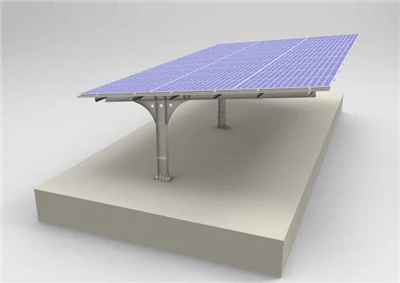
Solar carports are elevated fixed structures that provide covered parking while supporting PV modules overhead. The system includes steel or aluminum columns, a roof frame (often purlins and rafters), and standard solar mounting rails. The tilt angle is typically low (5–15°) to maintain structural efficiency while allowing drainage.
How It Works
Columns are anchored to concrete footings in parking rows. A structural steel frame spans between columns, creating a canopy. Solar modules mount directly onto this frame or onto rails attached to the frame. The fixed tilt angle is usually shallow to minimize wind load and visual impact.
Advantages
| Advantage | Explanation |
|---|---|
| Dual-purpose use | Generates electricity while providing shade for parked vehicles |
| EV integration | Ideal for pairing with electric vehicle charging stations |
| Reduced heat island effect | Shaded parking lots stay cooler in summer |
| High customer appeal | Adds perceived value for commercial properties |
| No land cost premium | Uses existing parking area without additional land purchase |
| Large available area | Parking lots offer substantial, unobstructed surface area |
Disadvantages
| Disadvantage | Explanation |
|---|---|
| Highest upfront cost | Steel structure significantly increases material and engineering costs |
| Complex engineering | Requires stamped structural drawings and wind load calculations |
| Longer installation time | Foundation and steel erection take 2–3x longer than rooftop |
| Limited height access | Maintenance requires lifts or ladders due to 8–12 ft height |
| Snow load considerations | Structural design must accommodate both solar and snow loads |
| Shallow fixed tilt | Lower energy yield per panel compared to ground-mounted optimal tilt |
Ideal Application Scenarios
Commercial and retail parking lots
Office building employee parking areas
Municipal parking facilities
EV charging station hubs
Airports and transit park-and-ride lots
Carport Design Considerations
| Factor | Recommendation |
|---|---|
| Column spacing | Typically 16–20 ft (4.8–6 m) to minimize obstructions |
| Minimum height | 8 ft (2.4 m) for standard vehicles; 12 ft (3.6 m) for RVs or trucks |
| Tilt angle | Typically 5–15° (shallow for wind reduction and aesthetics) |
| Drainage | Integrated gutters to prevent water pooling on modules |
| Lighting | Under-canopy LED lighting for nighttime safety |
| EV charger prep | Conduit runs from array to each parking bay |
5. Direct Comparison Table (Fixed Systems Only)
| Criteria | Rooftop | Ground-Mounted | Carport |
|---|---|---|---|
| Cost per watt | $0.20–0.40 | $0.30–0.50 | $0.60–1.00 |
| Land required | None (existing roof) | 5–8 acres per MW | None (existing parking) |
| Installation time | 1–3 weeks | 3–8 weeks | 6–12 weeks |
| Maintenance difficulty | High (heights) | Low (ground level) | Medium (lift required) |
| Tilt adjustability | Fixed to roof pitch | Fixed (preset 20–35°) | Fixed (shallow 5–15°) |
| Tilt optimization | Limited by roof | Optimal for latitude | Below optimal |
| Waterproofing needed | Yes – critical | No | Yes – under canopy |
| Permitting complexity | Medium | High | Very high |
| Best for roof condition | Good to excellent | N/A | N/A |
| Dual-use benefit | No | No | Yes (shade + parking) |
| Annual energy yield | Baseline | Highest (optimal tilt) | Lowest (shallow tilt) |
6. Case Studies
Case Study 1: Rooftop – Residential Community, Florida
Project: 150 kW across 30 homes with asphalt shingle roofs
Solution: Longsun Green Waterproof PV Solar Mounting Flashing Kits with aluminum rails, fixed to existing roof pitch (22–28°)
Result: Zero leaks reported after 3 hurricane seasons. Average 18% reduction in electricity bills per household.
Case Study 2: Ground-Mounted – Agricultural Farm, California
Project: 1.2 MW fixed-tilt ground mount on 6 acres of grazing land. Tilt angle: 25° south-facing.
Solution: Longsun Green driven steel piles with 6005-T5 aluminum rails
Result: Sheep continue grazing beneath panels (agrivoltaics). Annual energy output: 1,850 MWh. Payback period: 5.2 years.
Case Study 3: Carport – Corporate Campus, Texas
Project: 800 kW fixed-tilt solar carport covering 200 employee parking spaces. Tilt angle: 10°.
Solution: Longsun Green steel column structure with integrated EV charger conduits
Result: 40% of campus daytime energy demand met. Employee satisfaction increased due to shaded parking. 15 Level-2 EV chargers installed.

7. How to Choose the Right Fixed Mounting Method
Use this decision framework:
Step 1 – Assess available space
If roof is available, structurally sound, and south-facing → Consider rooftop
If land is available at low cost → Consider ground-mounted
If parking lot exists → Consider carport
Step 2 – Evaluate budget
Lowest upfront cost → Rooftop
Best long-term ROI → Ground-mounted (optimal tilt = higher yield)
Highest value-add (EV + shade) → Carport
Step 3 – Consider maintenance access
Willing to work at heights? → Rooftop acceptable
Prefer ground-level access? → Ground-mounted
Have lift equipment? → Carport feasible
Step 4 – Check local regulations
Some jurisdictions restrict ground-mounted systems on agricultural land
Carports may require commercial building permits
Rooftop systems often have expedited permitting (solar rights laws)
Step 5 – Understand tilt limitations
Rooftop: tilt = roof pitch (cannot change)
Ground: tilt = optimized for latitude (set once)
Carport: tilt = shallow (5–15°) for structural practicality
8. Why Choose Longsun Green for Fixed Mounting Systems?
| Feature | Rooftop | Ground | Carport |
|---|---|---|---|
| ISO9001 certified | ✓ | ✓ | ✓ |
| 25-year aluminum warranty | ✓ | ✓ | ✓ |
| 15-year anodizing warranty | ✓ | ✓ | ✓ |
| Fixed tilt engineering support | ✓ | ✓ | ✓ |
| Custom pile design | – | ✓ | – |
| Column structural design | – | – | ✓ |
| Flashing kits for waterproofing | ✓ | – | – |
| No tracking mechanisms | ✓ | ✓ | ✓ |
Longsun Green specializes exclusively in fixed-tilt solar mounting structures. We do not manufacture tracking systems, allowing us to focus entirely on perfecting durable, cost-effective, and reliable fixed mounting solutions for rooftops, ground, and carports.