

Abstract
Trapezoidal metal roof solar mounting systems represent a specialized engineering solution designed to facilitate photovoltaic (PV) system installation on the ubiquitous corrugated metal roofs of commercial, industrial, and agricultural buildings. This paper provides a multi-dimensional analysis of these systems, examining their structural design principles, functional mechanics, application scenarios, performance advantages, and real-world implementation cases. As global renewable energy adoption accelerates, optimizing rooftop PV deployment through reliable, cost-effective mounting solutions becomes increasingly critical for maximizing energy yield and return on investment.
1. Structural Introduction & Design Philosophy
1.1 System Components
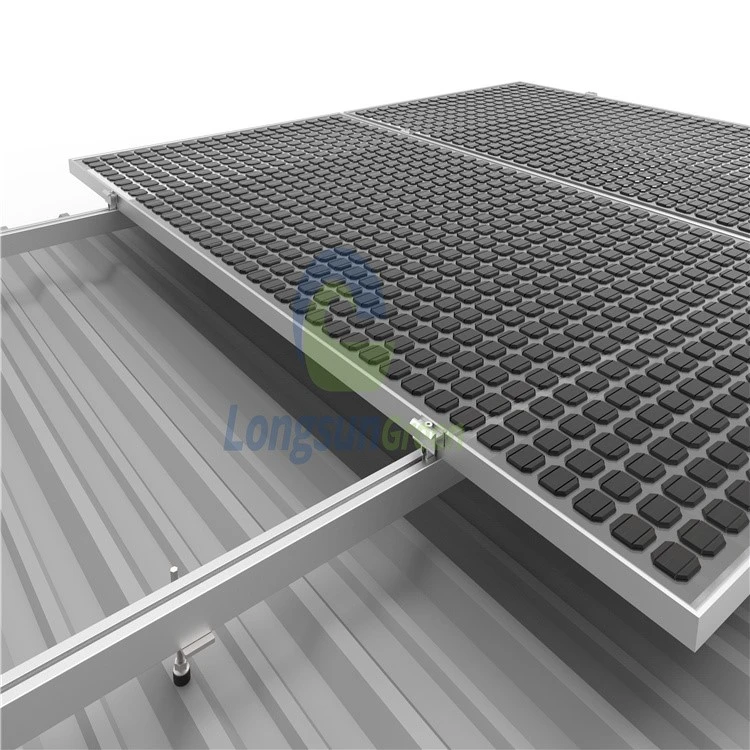
A complete trapezoidal metal roof mounting system typically comprises:
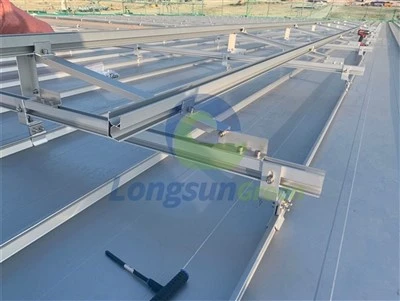
Primary Rails/Aluminium Profiles: Extruded 6005-T5 or 6063-T5 aluminium alloy profiles, anodized for corrosion resistance, serving as the main structural members supporting PV modules.
Attachment Hardware:
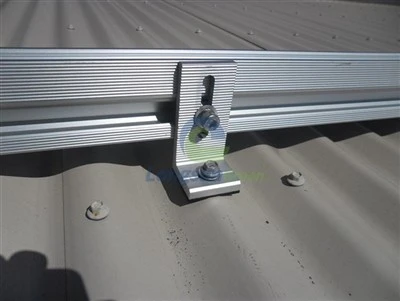
Penetrating Fasteners: Self-drilling, thread-forming screws (A2-70/A4-80 stainless steel) that secure mounting points directly through the metal sheeting.
Non-Penetrating Clamps: Specially engineered clamps that grip the raised seams without roof penetration.
Mounting Brackets: L-feet, U-brackets, or specialized bases that interface between rails and roof attachments.
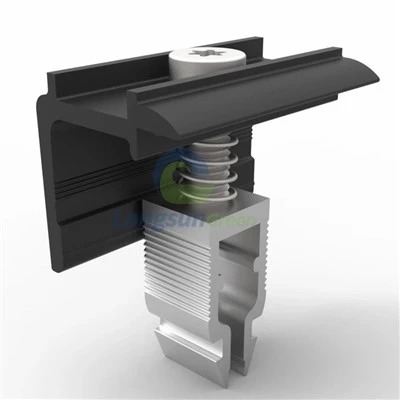
Module Clamping System: Mid-clamps and end-clamps that secure PV modules to rails without damaging frame integrity.
Supplementary Components: Cable management systems, grounding hardware, wind deflectors, and snow guards.
1.2 Structural Integration Principles
The system employs a distributed load transfer mechanism where point loads from modules are spread across multiple trapezoidal corrugations. This approach minimizes stress concentration on any single roof element. The design must account for:
Static Loads: Permanent weight of system components and PV modules (typically 15-25 kg/m²).
Dynamic Loads: Wind uplift (governed by ASCE 7, Eurocode 1, or local standards), snow accumulation, and seismic considerations where applicable.
Thermal Effects: Differential expansion between aluminium components and steel roofing, accommodated through slotted holes or flexible connections.
1.3 Material Science Considerations
Aluminium Alloys: Selected for optimal strength-to-weight ratio, corrosion resistance, and long-term durability in outdoor environments.
Stainless Steel Fasteners: Provide galvanic compatibility with both aluminium components and various roofing metals (galvanized steel, aluminum, zinc-aluminum alloy coated steel).
Surface Treatments: Anodizing (12-20μm) for aluminium; passivation for stainless steel to enhance longevity in coastal or industrial atmospheres.
2. Functional Principles & Engineering Mechanics
2.1 Load Transfer Pathway
PV Module → Clamps → Rails → Brackets → Roof Attachment → Roof Structure → Building Frame
The efficiency of this pathway determines system safety and longevity. Each interface must be engineered to:
Minimize deflection under load
Resist fatigue from cyclic loading (wind, thermal cycling)
Maintain electrical continuity for grounding
2.2 Waterproofing Integrity
Two primary approaches ensure weathertightness:
Penetrating Systems: Utilize sealing washers (EPDM or silicone) that compress to form a watertight seal around fastener penetrations. The washer design typically includes a pressure-distribution plate to prevent over-compression of roof insulation.
Non-Penetrating Systems: Eliminate penetration entirely through clamping mechanisms. These require precise engineering to ensure sufficient friction/gripping force to resist wind uplift without damaging roof panels.
2.3 Thermal Performance & Ventilation
Properly designed systems incorporate:
Adequate Air Gap: Typically 150-300mm between roof surface and module rear surface to facilitate convective cooling, which can improve module efficiency by 5-15% in warm climates.
Heat Island Mitigation: Reflective roof surfaces combined with PV shading can reduce building cooling loads by 15-30%.
3. Application Scenarios & Suitability Analysis
3.1 Ideal Deployment Contexts
Warehouses & Logistics Centers: Large, uninterrupted roof areas with relatively new roofing (10-15 years remaining life).
Manufacturing Facilities: High energy consumption patterns that benefit from on-site generation.
Agricultural Buildings: Barns, processing facilities, and storage structures with suitable orientation and load capacity.
Retail Big Box Stores: Flat electricity demand profiles and high visibility for sustainability messaging.
3.2 Technical Suitability Assessment
Before installation, a thorough evaluation must confirm:
Roof Condition: Metal thickness (≥0.4mm steel, ≥0.5mm aluminum), coating integrity, absence of significant corrosion.
Structural Capacity: Original design loads, potential degradation, and additional margin for PV system (typically 20-30 psf additional dead load).
Roof Penetration History: Existing penetrations may indicate waterproofing challenges.
Roof Warranty Considerations: Compatibility with existing roof warranties, which may require specific attachment methods or manufacturer approval.
3.3 Orientation & Tilt Optimization
While trapezoidal roofs typically have low slopes (1-5°), systems can be designed with:
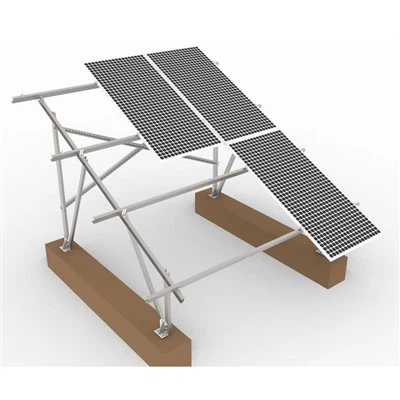
Flush-Mounted Configuration: Modules parallel to roof surface, minimizing wind profile and visual impact.
Tilted Configuration: Using tilt-legs to achieve 10-15° angles, increasing energy yield by 10-25% depending on latitude, at the cost of higher wind loads and material usage.

4. Performance Advantages & Economic Benefits
4.1 Technical Superiorities
Rapid Installation: Pre-engineered components and intuitive connections reduce installation time by 30-50% compared to customized solutions.
Minimal Roof Impact: Distributed load transfer preserves roof structure; proper sealing maintains waterproof integrity.
Adjustability & Tolerance Accommodation: Slotted holes and adjustable brackets accommodate roof irregularities and installation tolerances.
Maintenance Accessibility: Designed for safe technician access without compromising roof integrity.
4.2 Financial Advantages
Reduced Balance of System (BOS) Costs: Streamlined installation lowers labor costs, which typically represent 20-30% of total system cost.
Minimized Roof Modification Costs: Compared to ballasted systems that may require roof reinforcement, or penetrated systems that require extensive sealing work.
Increased Energy Yield: Optimal module temperature management through proper ventilation enhances lifetime energy production.
Extended System Lifespan: Corrosion-resistant materials and robust design typically offer 25-30 year service life, matching PV module warranties.
4.3 Sustainability Metrics
Embodied Carbon Payback: Typically 6-18 months for rooftop PV systems in most regions.
Urban Heat Island Reduction: PV-covered roofs absorb less heat than exposed dark roofs, reducing local ambient temperatures.
Land Use Efficiency: Utilizing existing infrastructure without additional land consumption.
5. Implementation Cases & Performance Data
5.1 Case Study: Distribution Center, Midwest USA
Project Scale: 2.8 MWp on 180,000 ft² roof area
System Design: Non-penetrating clamp system on 24-gauge galvanized steel roof (2° slope)
Installation Metrics:
Crew size: 6-person team
Installation rate: 75 kW/day peak
Total installation time: 7 weeks
Performance Data:
First-year generation: 3,420 MWh (22% above pro forma)
Temperature coefficient benefit: 8.5% yield increase compared to non-ventilated benchmark
O&M costs: $8/kW/year (below industry average)
5.2 Case Study: Automotive Manufacturing Plant, Germany
Project Scale: 5.1 MWp on 320,000 m² roof area
System Design: Penetrating system with specialized sealing washers for PIR-insulated roof
Engineering Challenges: Accommodating 15cm roof insulation compression without compromising thermal performance
Results:
23% of plant electricity demand met by PV
Roof warranty maintained through manufacturer-approved attachment method
Avoided carbon emissions: 2,850 tonnes CO₂-equivalent/year
5.3 Longitudinal Study: Portfolio of 15 Industrial Installations
A 5-year study of systems installed 2016-2021 revealed:
Zero roof leaks attributable to mounting system when installed per manufacturer specifications
Mean degradation rate of mounting components: 0.2%/year (visual inspection and pull-test analysis)
Average installation cost reduction: 18% from 2016 to 2021 through design optimization and installation experience
Wind event performance: No failures in winds up to 110 mph (design basis: 120 mph)

6. Future Developments & Research Directions
6.1 Technological Innovations
Integrated Rail-Bracket Systems: Reducing part count and installation time
Smart Mounting Systems: With embedded sensors for load monitoring, temperature sensing, and predictive maintenance
Robotic Installation: Automated component placement and fastening for large-scale deployments
Bifacial-Optimized Designs: Enhancing rear-side irradiance capture through reflective surfaces and optimized ground clearances
6.2 Materials Research
Composite Materials: Glass-fiber reinforced polymers offering corrosion resistance and reduced weight
Coatings & Surface Treatments: Advanced nano-coatings for self-cleaning and reduced soiling losses
Recyclability Improvements: Design for disassembly and material recovery at end-of-life
6.3 Design Methodology Advances
Digital Twin Integration: BIM modeling with real-time performance data
AI-Optimized Layouts: Machine learning algorithms for maximizing yield given roof obstructions and shading
Climate-Adaptive Designs: Systems optimized for specific regional conditions (high wind, heavy snow, coastal corrosion)
7. Conclusion
Trapezoidal metal roof solar mounting systems represent a mature yet evolving technology that enables efficient utilization of vast industrial and commercial roof areas for renewable energy generation. Their success hinges on proper engineering that respects roof integrity, optimizes structural performance, and ensures long-term reliability. As PV costs continue to decline and climate commitments intensify, these systems will play an increasingly vital role in global energy transitions. Future advancements will likely focus on further cost reduction through installation automation, enhanced energy yield through improved thermal management, and increased intelligence through embedded monitoring capabilities.
The most successful implementations arise from collaborative approaches involving mounting system manufacturers, roofing experts, structural engineers, and PV installers-all working to balance energy production objectives with building integrity preservation.