

As solar energy adoption accelerates worldwide, one of the most fundamental decisions for any project is whether to implement a grid-tied or off-grid photovoltaic system. The choice significantly impacts system design, component selection, cost structure, and long-term reliability. This article provides a practical, multi-angle comparison to help you make an informed decision.
1. System Structure & Working Principle
Grid-Tied Solar System
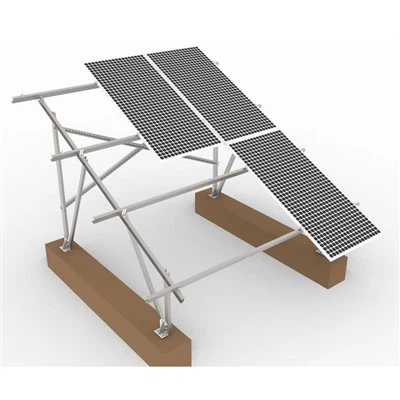
A grid-tied system is directly connected to the utility grid. It consists of solar panels, a mounting structure (such as those manufactured by Longsun Green), inverters, and grid connection equipment. During the day, solar energy powers the load, with excess electricity exported to the grid. At night or during low generation periods, power is drawn from the grid. This system does not require batteries.
Off-Grid Solar System
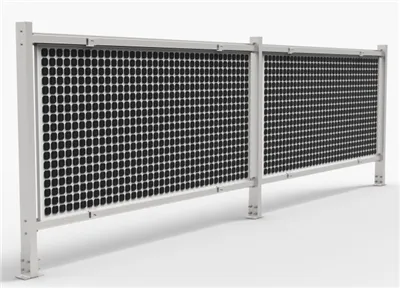
An off-grid system operates independently of the utility grid. It comprises solar panels, mounting structures, a charge controller, battery storage, and an inverter. Solar energy is stored in batteries and used when needed. The system must be sized to meet all loads throughout the year, including periods of low sunlight.
2. Functional Principles
| Aspect | Grid-Tied | Off-Grid |
|---|---|---|
| Grid Dependence | Fully dependent; shuts down during grid outage (unless hybrid) | Completely independent |
| Energy Storage | No batteries required | Batteries essential for nighttime and backup |
| Efficiency | Higher (no battery loss, ~95–98% efficiency) | Lower due to battery charge/discharge losses |
| Net Metering | Surplus electricity can offset grid usage | Not applicable |
3. Application Scenarios
Grid-Tied Is Suitable For:
Urban and suburban residential rooftops – Maximize self-consumption with grid backup
Commercial and industrial facilities – Reduce electricity bills during peak hours
Large-scale ground-mounted solar farms – Sell electricity to the grid for revenue
Regions with stable grid infrastructure and net metering policies
Off-Grid Is Suitable For:
Remote rural areas – No grid access or grid extension is cost-prohibitive
Mountain cabins, islands, farms – Locations far from utility infrastructure
Critical facilities – Hospitals, communication towers, water pumping stations requiring uninterrupted power
Regions with unreliable grid or frequent blackouts

4. Product Advantages
Grid-Tied Advantages
Lower initial investment – No battery costs
Simpler maintenance – Fewer components to manage
Higher ROI – Payback periods typically 3–7 years in favorable markets
Net metering benefits – Grid acts as virtual storage
Off-Grid Advantages
Energy independence – No reliance on utility providers
Reliability in unstable grids – Continuous power even during grid failures
Ideal for remote locations – Enables electrification where grid is unavailable
Full self-sufficiency – Complete control over energy production and consumption
5. Key Considerations for Selection
| Factor | Grid-Tied | Off-Grid |
|---|---|---|
| Grid Availability | Requires grid access | No grid required |
| Budget | Lower upfront cost | Higher upfront cost due to batteries |
| Energy Demand | Suitable for variable loads | Requires precise load calculation |
| Maintenance | Minimal | Regular battery maintenance needed |
| Backup Needs | No backup unless hybrid inverter added | Full backup inherently included |
6. Conclusion
Choosing between grid-tied and off-grid solar systems depends primarily on grid accessibility, budget, energy independence requirements, and application scenario.
If grid connection is available and stable, a grid-tied system offers the fastest payback and simplest maintenance.
If grid access is absent or unreliable, an off-grid system ensures energy security and independence.
For hybrid needs-such as backup power with grid connection-a hybrid system combining both approaches may be the optimal solution.
As a professional solar mounting structure manufacturer, Longsun Green provides reliable, corrosion-resistant mounting solutions tailored to both grid-tied and off-grid applications. With over a decade of experience, we support projects ranging from residential rooftops to large-scale off-grid installations.