

Longsun Green Highlights Key Applications and Advantages of Fixed-Tilt Systems in Specific Scenarios
While single-axis solar trackers have become the predominant structural choice for large-scale solar projects in the United States, fixed-tilt mounting systems continue to hold significant and irreplaceable value under specific conditions. A synthesis of industry analysis reveals that factors such as challenging terrain, high wind loads, and economic considerations ensure fixed-tilt racks remain a vital and viable solution for many utility-scale and distributed generation applications.
The primary advantage of single-axis trackers is their ability to increase energy yield by orienting panels toward the sun throughout the day. Data from the U.S. Energy Information Administration indicates that tracking systems have been installed in over half of all utility-scale solar projects in the U.S. since 2017. Domestic tracker manufacturing capacity has scaled accordingly to meet this robust demand.
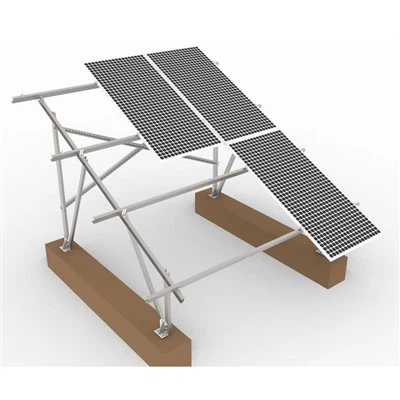
However, fixed-tilt systems excel in environments where trackers face limitations. In regions prone to high winds, heavy snow loads, or on steep, uneven terrain, the simplicity and robustness of fixed-tilt racks offer distinct benefits. Their lack of moving parts makes them inherently more resilient in extreme weather conditions, such as hurricane-prone areas. Furthermore, while trackers can be programmed to stow panels flat in high winds, frequent stowing negates the energy gain benefit that justifies their higher cost.
"Under severe conditions, a tracker might spend considerable time in a stowed position, effectively functioning as a fixed-tilt system without delivering its core energy advantage," explained an industry engineering expert, underscoring the situational limitations of trackers.

Fixed-tilt systems also demonstrate superior adaptability to complex sites. Their design allows for more granular adjustments to panel angles across shorter intervals, accommodating steep slopes with a higher tolerance. This can significantly reduce expensive earthwork and site grading requirements during project construction.
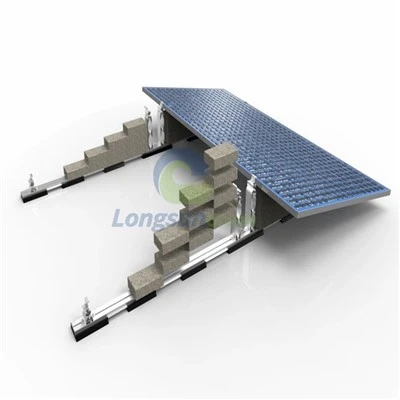
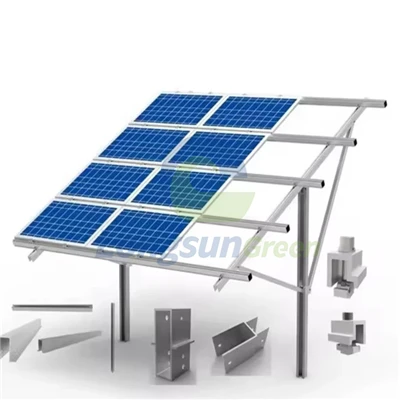
From a logistical and economic standpoint, fixed-tilt racks present further advantages. They are typically lighter, require less specialized foundation work-making them suitable for rocky or sandy soils-and involve fewer components. This translates to lower manufacturing costs, simplified transportation, reduced installation complexity, and potentially lower labor costs, especially in high-wage regions.
"Simplified installation and the absence of moving parts make fixed-tilt systems a compelling choice from a total installed cost and long-term Operations & Maintenance perspective," noted a technical director from a solar technology firm. Post-construction, O&M efforts for fixed-tilt arrays focus primarily on site and electrical component maintenance, avoiding the ongoing mechanical upkeep associated with trackers.
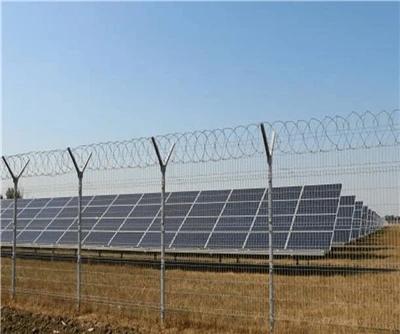
Additionally, fixed-tilt projects can often achieve a higher system density with less concern for inter-row shading, allowing for greater energy generation per unit of land in certain configurations.
As the solar industry continues to expand, both tracking and fixed-tilt technologies will play crucial roles. The optimal choice depends on a detailed evaluation of site-specific conditions, climate, and project economics.
About Longsun Green:
Longsun Green is a dedicated manufacturer of high-quality solar mounting structures. Committed to supporting the global transition to renewable energy, we provide robust, reliable, and cost-effective racking systems for projects of all scales. Our engineering expertise ensures optimal performance and longevity for solar installations worldwide.
Media Contact:
Amber
Email: amber@longsungreen.com
Phone: +86 18859620328
Website: www.longsungreen.com
Source: Analysis inspired by industry reports and market observations. Original source material can be referenced at [Solar Bracket - Industry Insights].