

A common misconception persists that solar panels are ineffective in overcast conditions. This belief often deters potential adopters in regions with varied climates. The reality, however, is far more encouraging. Modern photovoltaic (PV) systems are engineered to generate substantial electricity even when the sun is behind clouds. At LongsunGreen, a leading manufacturer of high-performance solar mounting structures, we understand that system reliability-regardless of weather-is paramount to maximizing return on investment.
1. The Principle of Diffuse Radiation
Solar panels do not require direct sunlight to generate electricity; they rely on light. Photovoltaic cells are sensitive to the entire visible spectrum.
Direct vs. Diffuse Irradiance: On a clear day, panels capture direct beam radiation. On cloudy days, they capture diffuse radiation-sunlight scattered by water droplets and atmospheric particles.
Performance Metrics: Typically, a solar system operates at 10% to 25% of its rated capacity under heavy overcast skies. On partly cloudy days, a phenomenon known as the "edge-of-cloud effect" can actually cause a temporary surge in output, sometimes exceeding the panel's standard rating due to light reflection and concentration.
2. Structural Considerations for Low-Light Environments
While the panels capture light, the mounting structure plays a critical role in optimizing performance under suboptimal conditions.
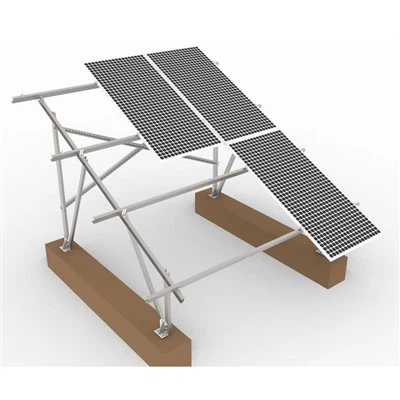
Optimized Tilt Angles: Even with diffuse light, the angle of incidence matters. A mounting system that secures panels at the optimal latitude-based tilt ensures maximum exposure to the diffuse sky dome. Longsun Green's adjustable mounting solutions allow for precision alignment to capture every available photon.
Bifacial Module Compatibility: In cloudy conditions, reflected light (albedo) becomes proportionally more significant. Longsun Green's elevated ground mounts and specialized racking systems are designed to accommodate bifacial panels, allowing the rear side to capture reflected light from the ground, increasing yield by 5% to 15% even on overcast days.

3. Functional Principle: System Resilience
A well-designed solar system relies on more than just the panels; it relies on system architecture.
Microinverters vs. String Inverters: Traditional string inverters can suffer when one panel in a series is shaded. However, modern systems utilizing microinverters or power optimizers (often paired with optimized mounting layouts) isolate the performance of each panel. This ensures that a shaded or cloud-affected panel does not cripple the entire array.
Low-Light Performance (LLP): High-quality monocrystalline silicon cells (PERC technology) exhibit superior low-light performance compared to older polycrystalline technologies, maintaining higher conversion efficiency during dawn, dusk, and cloudy periods.
4. Application Scenarios: Cloudy Climates
Solar energy is not exclusive to deserts. Some of the world's leading solar markets operate successfully in regions known for overcast weather.
Northern Europe (Germany, UK): Despite limited annual sunshine hours, Germany remains a global leader in solar capacity, relying on diffuse radiation capture and robust mounting structures that withstand frequent rain and wind loads.
High-Humidity Coastal Regions: In areas like Southeast Asia or the Pacific Northwest, frequent cloud cover is offset by the cooling effect of ambient moisture. Longsun Green's corrosion-resistant aluminum and stainless steel mounts ensure that systems remain operational and structurally sound for 25+ years, regardless of frequent overcast days.

5. Product Advantages: Maximizing Every Photon
At Longsun Green, we design mounting systems that contribute to overall system efficiency in all weather conditions.
Cold Roof Ventilation: Our mounting profiles elevate panels to create a ventilation gap. This passive cooling is critical because panels operate more efficiently at lower temperatures. Cloudy days often bring cooler ambient temperatures, which naturally improves voltage output.
Durability in Adverse Weather: A system must survive the storm to produce on the cloudy days that follow. Our mounting structures are engineered to withstand wind speeds of up to 60 m/s and snow loads of up to 1.4 kN/m², ensuring that when the clouds clear, the system is intact and ready.
6. Case Study & Research Significance
Case Study: Pacific Northwest Residential Project (USA)
A 12kW residential installation utilizing Longsun Green's aluminum alloy rail system was monitored over a 12-month period. Despite the region experiencing over 200 overcast days annually, the system generated 82% of its estimated annual output. During the winter months, diffuse radiation contributed to over 70% of total generation. The client achieved payback within 5.5 years, demonstrating that cloudy climates do not negate solar viability.
Research Significance:
Data from the National Renewable Energy Laboratory (NREL) confirms that solar panels can generate power even under artificial light. The key takeaway for investors and homeowners is that irradiance, not heat, is the driver of solar energy. By utilizing high-quality mounting structures that optimize angle, support bifacial technology, and ensure longevity, solar systems remain a highly reliable asset regardless of local cloud cover.