

Ballast Mounts for Flat Roofs in Thailand: Key Features & Practical Considerations
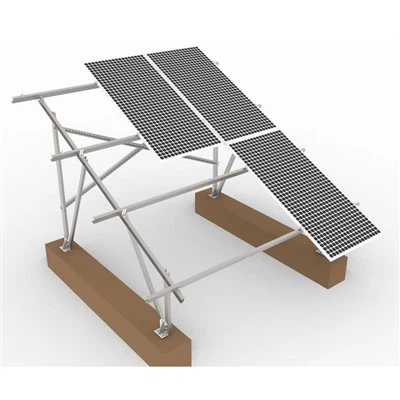
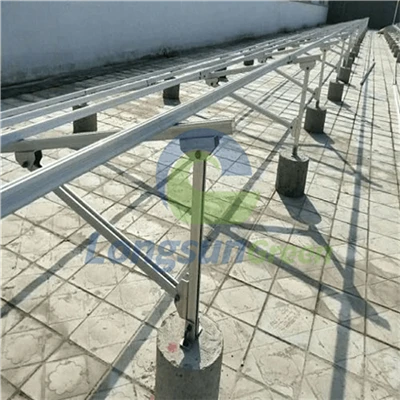
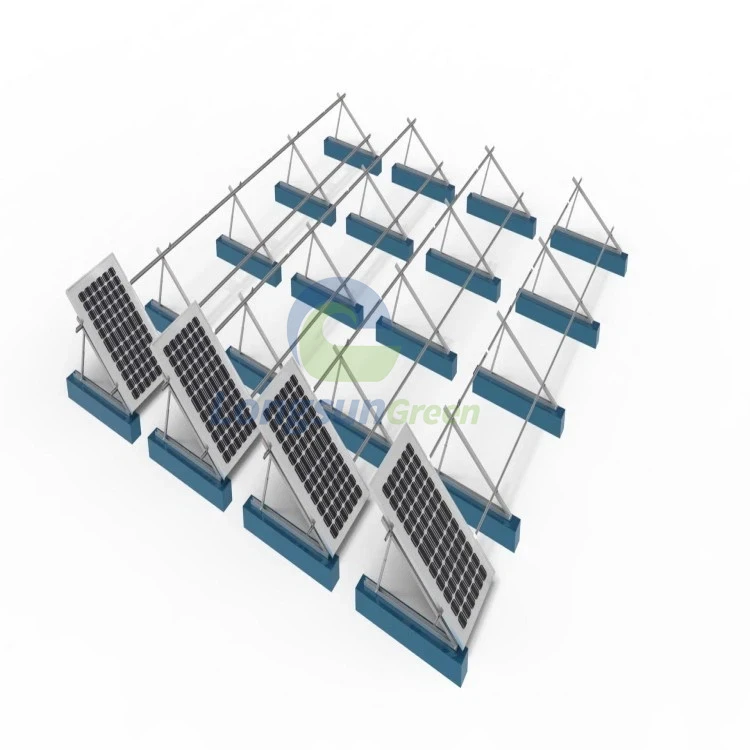
As Thailand accelerates its transition toward renewable energy, rooftop solar installations on commercial, industrial, and residential flat roofs are growing rapidly. Ballast Mounts for Flat Roofs offer a non-penetrating, gravity-based solution that preserves roof integrity while delivering reliable solar performance. Below is a practical, research-oriented overview of key features and critical considerations for the Thai market.
Key Features
Non-Penetrating Design
No drilling or roof attachment required.
– Protects waterproof membranes (EPDM, TPO, PVC) and maintains roof warranties.
– Ideal for Thailand's humid tropical climate where water ingress risks are high.
Optimized Tilt for Thai Latitude (5°–15°)
– Adjustable tilt angles maximize annual energy yield for locations between 5°N and 20°N.
– Low tilt also reduces wind exposure and material costs.
Pre-Assembled Components
– Factory-ready rails and bases reduce on-site labor by up to 40%.
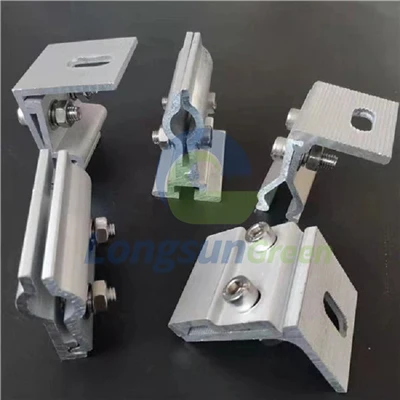
– Snap-in hardware enables faster installation, critical for large-scale projects in Bangkok or industrial estates.
High Wind Resistance
– SGS-tested up to 4,000N, suitable for Thailand's monsoon wind speeds (typically < 30m/s in most zones).
– Optional wind deflectors further reduce required ballast weight.
Corrosion-Resistant Material
– AL6005-T5 aluminum with 10μm+ anodized finish.
– Resists salt spray, humidity, and UV exposure – essential for coastal provinces like Chonburi, Rayong, and Phuket.
Universal Panel Compatibility
– Works with standard framed panels and lightweight flexible modules.
– No proprietary panel requirements, allowing procurement flexibility.

Practical Considerations for Thailand
1. Ballast Weight & Structural Assessment
– Research finding: Thai buildings often have lower roof load capacities compared to Western standards (e.g., 50–100 kg/m² vs. 150+ kg/m²).
– Action: Always conduct a structural engineering review. Use lightweight concrete blocks or optimize rail spacing to reduce weight.
– Longsun solution: Optional wind deflectors can decrease ballast requirements by 20–30%.
2. Monsoon Season & Drainage
– Thailand experiences heavy seasonal rains. Ballast mounts should not block existing roof drains.
– Best practice: Elevate rails slightly (using low-profile feet) or position ballast blocks away from drainage paths.
– Ensure the system allows water flow and debris cleaning access.
3. High Temperature & Thermal Expansion
– Rooftop temperatures in Thailand can exceed 70°C.
– Aluminum rails and panel frames expand; use slotted connections or expansion gaps.
– Longsun design: Integrated bonding and snap-in hardware accommodate thermal movement without stress.
4. Coastal & Industrial Corrosion Risks
– Provinces like Rayong, Songkhla, and Samut Prakan have high airborne salt or chemical exposure.
– Minimum requirement: Anodized aluminum (10μm+) or optional powder coating. Stainless steel fasteners (SUS 304 or 316) are mandatory.
5. Installation & Labor Skills
– Thailand has a growing pool of solar installers, but flat roof ballast systems require specific training.
– Recommendation: Use pre-assembled, color-coded components to reduce errors. Request factory-support onboarding from Longsun Green.
6. Building Codes & Approvals
– Refer to EIT (Engineering Institute of Thailand) standards and local building codes.
– Non-penetrating systems often face fewer permitting hurdles, but wind load calculations may still be required.
– Longsun Green provides ASCE7-10 and SGS test reports accepted by Thai engineers.

Why Longsun Green for Thailand?
15-year warranty and 25-year service life – aligned with typical solar PPA project durations.
ISO, CE, SGS, AS/NZS, JIS certified – recognized by Thai EPCs and developers.
Customizable solutions – tilt angles, ballast weight, and rail lengths tailored to Thai roof types (flat, slightly sloped, or old concrete slabs).
Local logistics – Shipped from Xiamen Port, with fast delivery to Laem Chabang and Bangkok Port.
Conclusion
Ballast Mounts for Flat Roofs are an excellent fit for Thailand's growing rooftop solar market, provided that engineers account for lower roof load capacities, monsoon drainage, high temperatures, and coastal corrosion. By selecting a certified, corrosion-resistant, and customizable system like Longsun Green's, project owners can achieve safe, durable, and high-yield solar installations without compromising roof integrity.