

Introduction
As solar energy adoption accelerates globally, the photovoltaic (PV) mounting system has become a focal point for technological advancement. Among its critical components, the solar inner clamp (also known as mid-clamp, center clamp, or module retainer) plays a pivotal yet often overlooked role in ensuring system durability, efficiency, and safety. This article explores the design, functionality, and industry significance of these essential hardware components.
1. What is a Solar Inner Clamp?
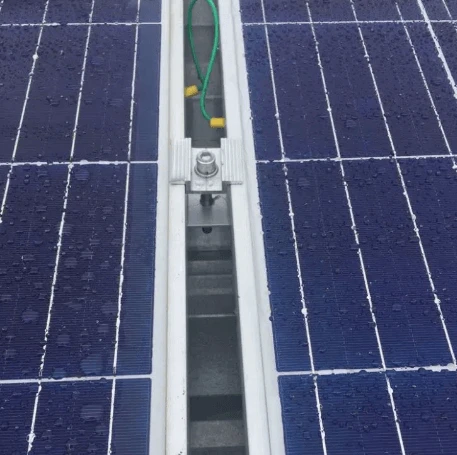
A solar inner clamp is a specialized fastener used in solar racking systems to secure PV modules to mounting rails at intermediate points between panels. Unlike end clamps that anchor panel edges, mid clamps provide:
Structural stability by preventing lateral displacement
Wind load resistance (up to 60 m/s as per IEC 61215 standards)
Thermal expansion accommodation through flexible design
Key Terminology Variations:
Mid-clamp (most widely recognized in North America)
Center clamp (common in European markets)
Module connector (used in technical specifications)
2. Technical Specifications & Material Science
Modern solar inner clamps are engineered to meet rigorous performance demands:
Materials:
Aluminum alloy 6005-T5: The industry standard for its optimal strength-to-weight ratio and corrosion resistance
Stainless steel variants: For high-salinity or extreme weather environments
Critical Design Features:
Anti-slip grooves: Enhance grip on panel frames
UV-resistant coatings: Extend service life beyond 25 years
Tool-less installation: Some models incorporate quick-lock mechanisms
Industry Compliance:
TÜV Rheinland certification (IEC 62782 for mechanical loads)
UL 2703 listing for North American markets
3. Installation Advantages Over Traditional Methods
Compared to direct bolt-fastening, solar mid clamps offer:
A. Time Efficiency
Reduce installation time by up to 40% through:
Pre-assembled components
Unified torque settings (typically 8-12 Nm)
B. Maintenance Benefits
Enable single-panel replacement without disassembling entire arrays
Eliminate frame drilling that voids module warranties
C. Structural Integrity
Distributed load management minimizes microcrack risks
Accommodate ±5mm panel alignment tolerances

4. Market Trends & Technological Evolution
The global solar mounting hardware market (projected to reach $4.7B by 2027) drives innovations in clamp design:
Emerging Technologies:
Smart clamps: Integrated sensors for real-time load monitoring
Bifacial-compatible designs: Low-profile clamps to reduce shading
Robotic installation-optimized: Magnetic alignment features for automated PV farms
Sustainability Focus:
Recyclable aluminum construction (95% post-consumer scrap compatibility)
Powder-coating processes reducing VOC emissions
5. Selection Criteria for Solar Professionals
When evaluating PV module clamps, consider:
Compatibility Factors
Rail type (e.g., C-channel vs. U-channel)
Panel frame thickness (1.5-4mm range)
Environmental Adaptability
Coastal: Salt spray resistance (ASTM B117 tested)
Desert: Sand abrasion protection
Certifications
ISO 9001 for manufacturing quality
CE marking for EU compliance
Conclusion
While often overshadowed by solar panels and inverters, the solar inner clamp remains a cornerstone of reliable photovoltaic installations. Its evolution from simple hardware to engineered solutions reflects the solar industry's maturation. As floating solar, agrivoltaics, and building-integrated PV (BIPV) gain traction, next-generation clamping technologies will continue to enable safer, more efficient renewable energy systems worldwide.
For technical specifications or testing data, consult whitepapers from the Solar Energy Industries Association (SEIA) or International Renewable Energy Agency (IRENA).