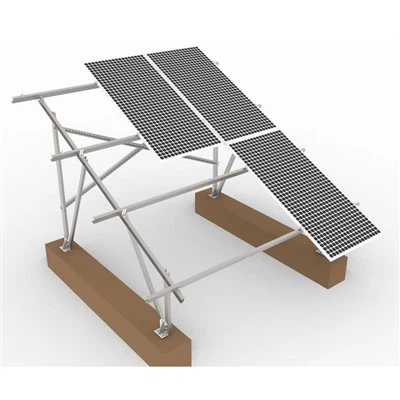


Japan's Ministry of Economy, Trade and Industry (METI) has released its renewable energy feed-in tariff (FIT) rates for fiscal year 2026 and beyond. Under the new framework, large-scale ground-mount solar PV plants will begin phasing out of the FIT scheme from fiscal year 2027, marking a decisive shift from policy-driven support to market-driven operations.
Policy Shift: Ground-Mount Solar Exits Subsidy Era
Starting in fiscal year 2027, commercial ground-mount solar projects will fully transition to a post-FIT regime, moving away from public subsidies. The decision reflects a view that large-scale ground-mount solar has reached sufficient market competitiveness and no longer requires long-term government support.
For fiscal year 2026, the final FIT rates stand at 9.9 yen per kWh for systems between 10 kW and 50 kW, and 9.6 yen per kWh for systems above 50 kW under the non-tendered category.
From 2027 onward, new projects in these categories will need to adopt self-sustaining business models, such as power purchase agreements (PPAs) or wholesale market participation. Success will depend less on grid connection approvals and more on managing price volatility through accurate power generation forecasting and intelligent operations.
Strategic Focus: Rooftop Solar Gains Priority
In contrast to the withdrawal of subsidies for ground-mount projects, the policy provides strong support for rooftop solar.
To address the higher installation costs associated with complex building structures, METI will continue its upfront investment support program. A front-loaded tariff structure enables investors to recover costs more quickly in the early stages.
For residential rooftop systems under 10 kW, the rate is set at 24 yen per kWh for the first four years, dropping to 8.3 yen per kWh for years five through ten. For commercial rooftop systems of 10 kW and above, the rate is 19 yen per kWh for the first five years, then 8.3 yen per kWh for years six through twenty.
Other Renewables: Wind Slows, Offshore Floating Holds
The announcement also set rates for other renewable energy sources.
Onshore wind will receive 14.0 yen per kWh in fiscal year 2026, decreasing to 13.7 yen per kWh in fiscal year 2027. Floating offshore wind remains at a premium level of 36.0 yen per kWh through fiscal year 2027. Small and medium hydropower, geothermal, and biomass also received updated rates for the coming fiscal year.
Consumer Impact: Renewable Surcharge Reaches New High
The government has set the renewable energy surcharge for fiscal year 2026-reflected in electricity bills from May 2026 to April 2027-at 4.18 yen per kWh.
This surcharge functions as a cost-sharing mechanism. The gap between the market price and the higher FIT rates paid to renewable energy producers is distributed across all electricity consumers. As the surcharge rises, households and businesses will face increased electricity costs.
This trend is expected to accelerate adoption of self-consumption solar systems, as businesses seek to offset rising utility expenses through on-site generation.
Looking Ahead
Japan's renewable energy market is moving from a "policy greenhouse" to market independence. With ground-mount solar transitioning to PPA and merchant models, and rooftop solar receiving targeted support, the industry is entering a period of transformation. Success will increasingly hinge on operational efficiency, forecasting accuracy, and the ability to navigate market-based revenue models.
Source: Japan Ministry of Economy, Trade and Industry (METI)

Media Contact:
Email: amber@longsungreen.com
Website: www.longsungreen.com