

1. Introduction: Harnessing Sunlight Through Semiconductor Science
Solar photovoltaic (PV) power generation represents a direct energy conversion technology that transforms sunlight into electricity via the photovoltaic effect. First observed by Edmond Becquerel in 1839 and practically demonstrated by Bell Labs in 1954 with the first silicon solar cell (6% efficiency), PV technology has evolved from powering space satellites to becoming the world's fastest-growing energy source. By the end of 2023, global cumulative PV capacity exceeded 1.6 terawatts, supplying approximately 6% of global electricity demand, with projections indicating this could reach 30-40% by 2050 under net-zero scenarios.
2. Scientific Foundation and Functional Principles
2.1 The Photovoltaic Effect
When photons with sufficient energy (exceeding the semiconductor's bandgap, typically 1.1 eV for silicon) strike a PV cell, they transfer energy to electrons in the valence band, promoting them to the conduction band and creating electron-hole pairs. The built-in electric field within the p-n junction separates these charges, generating a direct current.
2.2 Spectral Response and Efficiency Limits
The Shockley-Queisser limit establishes a theoretical maximum efficiency of 33.7% for single-junction solar cells under unconcentrated sunlight, considering fundamental losses from:
Spectral mismatch (approximately 32% loss)
Recombination (approximately 33% loss)
Thermodynamic (approximately 18% loss)
Practical commercial modules achieve 15-23% efficiency, while laboratory cells have surpassed 47% using multi-junction concentrator designs.
3. Structural Components and System Architecture
3.1 Cell-Level Components
Absorber Layer: Typically crystalline silicon (c-Si: 95% market share) or thin-film materials
Emitter Layer: Doped region creating the p-n junction
Anti-Reflection Coating: Silicon nitride (SiNₓ) reducing reflection to <3%
Front Contacts: Silver finger grids (60-100 μm width)
Rear Contacts: Aluminum back surface field (Al-BSF) or passivated emitter and rear cell (PERC)
3.2 Module Assembly
Encapsulation: Ethylene-vinyl acetate (EVA) or polyolefin elastomer (POE) layers
Front Glass: Low-iron tempered glass (3.2-4.0 mm thickness)
Backsheet: Multi-layer polymer (PVF/PET/PVF) providing electrical insulation
Frame: Anodized aluminum alloy
Junction Box: Bypass diodes preventing hot spots
3.3 Balance of System (BOS)
Inverters: String (residential), central (utility-scale), or microinverters (module-level)
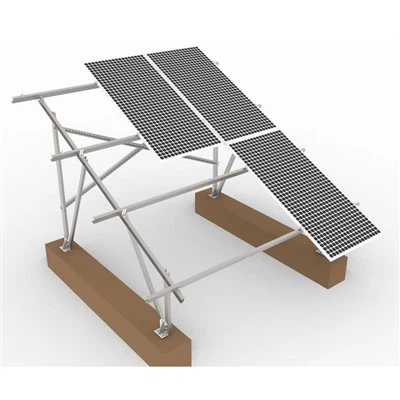
Mounting Structures: Fixed-tilt (15-40°), single-axis tracking (+15-25% yield), or dual-axis tracking
Monitoring Systems: Maximum power point tracking (MPPT) algorithms optimizing output

4. Technology Evolution: Generational Advancements
4.1 First Generation: Crystalline Silicon
Monocrystalline (mono-Si): Czochralski-grown, 22-24% efficiency
Polycrystalline (multi-Si): Cast silicon, 18-20% efficiency
Market Dominance: 95% share, benefiting from semiconductor industry spillovers
4.2 Second Generation: Thin-Film Technologies
Cadmium Telluride (CdTe): First Solar's leading technology, 19-20% efficiency, low temperature coefficient
Copper Indium Gallium Selenide (CIGS): 20-22% efficiency, flexible applications
Amorphous Silicon (a-Si): 6-8% efficiency, building-integrated applications
4.3 Third Generation: Emerging Concepts
Perovskite Solar Cells: Rapid efficiency gains from 3.8% (2009) to 26.1% (2024), low-temperature processing
Organic Photovoltaics (OPV): Solution-processable, flexible, semi-transparent (10-18% efficiency)
Quantum Dot PV: Tunable bandgaps via size control, 18.1% certified efficiency
Tandem Architectures: Perovskite/silicon (33.9% certified), III-V multi-junction (47.6% under concentration)
5. Application Scenarios and Deployment Models
5.1 Utility-Scale Power Plants
Characteristics: >1 MW capacity, grid-connected, ground-mounted
Case: Huanghe Hydropower Hainan Solar Park (China), 2.2 GW, world's largest
Innovations: Agri-PV combining energy and crop production (8-10% higher land efficiency)
5.2 Distributed Generation
Residential Rooftops: 3-10 kW systems, self-consumption with storage integration
Commercial Buildings: 50 kW-1 MW, reducing demand charges
Community Solar: Shared arrays serving multiple households or businesses
5.3 Specialized Applications
Floating PV: Installed on reservoirs (reduces evaporation, improves efficiency via cooling)
Building-Integrated PV (BIPV): Façade elements, solar windows, roofing tiles
Transportation: Vehicle-integrated PV (VIPV), solar charging infrastructure
Off-Grid Systems: Telecommunications, rural electrification, IoT sensors
6. Product Advantages and Performance Metrics
6.1 Economic Advantages
Levelized Cost of Electricity (LCOE): $0.03-0.06/kWh (2024), 89% reduction since 2010
Payback Period: Energy payback time 1-2 years for silicon modules (25+ year lifespan)
Price Trajectory: PV module prices decreased from $100/W (1975) to $0.10-0.15/W (2024)
6.2 Technical Performance
Temperature Coefficient: -0.3% to -0.5%/°C for crystalline silicon
Low-Light Performance: Thin-film technologies maintain better efficiency under diffuse light
Durability: IEC 61215 certification ensuring 25-year performance warranty (80% of initial power)
6.3 Environmental Benefits
Carbon Footprint: 40-50 gCO₂eq/kWh (compared to 500-1000 gCO₂eq/kWh for coal)
Energy Return on Investment (EROI): 10:1 to 30:1 for modern PV systems
Circular Economy: 95% material recovery rates achievable with proper recycling
7. Successful Case Studies and Impact Analysis
7.1 National Success Stories
China: World leader with 609 GW installed (2023), 80% global manufacturing share
Germany: Energiewende pioneer reaching 81 GW (2023), 12% of national electricity
California, USA: 45 GW installed, achieving >30% renewable penetration in 2023
7.2 Innovative Project Examples
Noor Abu Dhabi (UAE): 1.17 GW single-site plant, LCOE $0.0135/kWh (2021)
Lianghu Solar Project (China): 550 MW floating PV with 7.8% higher yield than land-based
Solar Roof Program (Japan): 2 million homes with PV, disaster-resilient power supply
8. Research Frontiers and Future Pathways
8.1 Materials Science Innovations
Perovskite Stability: Encapsulation methods targeting >20-year operational lifetime
Silicon Heterojunction (HJT): Combining crystalline silicon with amorphous layers (26.8% efficiency)
Tandem Cell Commercialization: Overcoming interconnection and manufacturing challenges
8.2 Manufacturing Advancements
N-type Silicon Transition: TOPCon (Tunnel Oxide Passivated Contact) reaching 25% efficiency
Kerfless Wafering: Wire and laser technologies reducing silicon waste by 40%
Roll-to-Roll Processing: Continuous manufacturing for thin-film and organic PV
8.3 System Integration
PV-Storage Hybridization: DC-coupled systems improving round-trip efficiency to 94%
Smart Grid Integration: Advanced inverters providing grid services (voltage support, frequency regulation)
Digital Twin Technology: AI-driven performance prediction and maintenance optimization
8.4 Sustainability and Circularity
Recycling Technologies: High-value material recovery (silicon, silver, indium)
Lead-Free Perovskites: Tin-based alternatives eliminating toxic materials
Design for Disassembly: Modular components facilitating end-of-life processing

9. Global Impact and Industry Outlook
The International Energy Agency projects solar PV becoming the largest electricity source by 2027, with annual additions exceeding 400 GW. Key trends include:
Terawatt-Scale Manufacturing: China's expansion to 1,000 GW annual production capacity by 2025
Supply Chain Diversification: India, US, and EU developing domestic manufacturing
Technology Convergence: PV combined with agriculture, water management, and building systems
Policy Evolution: Feed-in tariffs transitioning to competitive auctions and corporate PPAs
10. Conclusion: Towards a Solar-Dominant Energy Future
Solar photovoltaic technology has completed its journey from laboratory curiosity to global energy transformation driver. With continued efficiency improvements, cost reductions, and integration innovations, PV is uniquely positioned to address the dual challenges of climate change and energy access. The next decade will witness not only further scale expansion but also qualitative transformations in how solar electricity is generated, stored, distributed, and utilized across all sectors of the global economy.