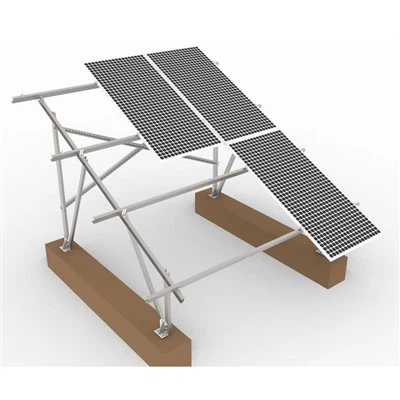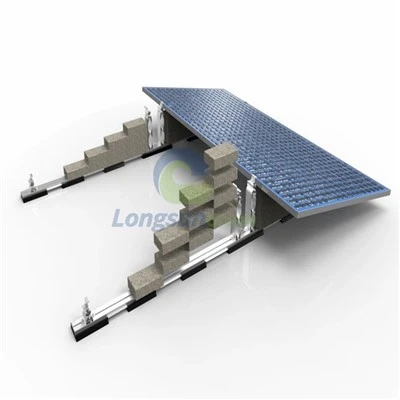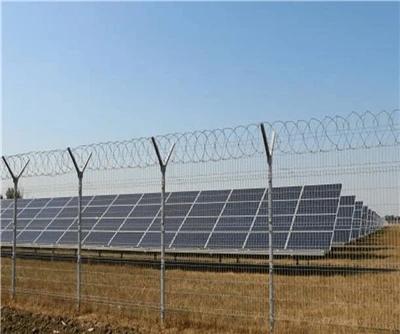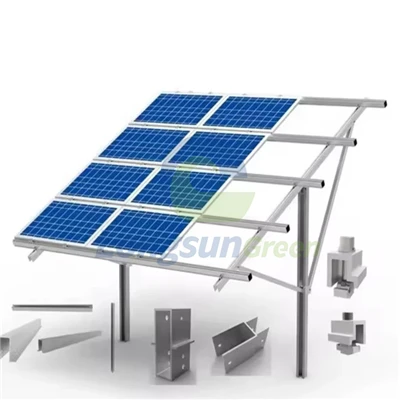


At Longsun Green, we often emphasize that the most visible part of a solar installation-the gleaming panels-is only as reliable as its most unseen component: the foundation. While our expertise lies in manufacturing the structural frameworks that hold photovoltaic (PV) modules, we recognize that a truly robust system is built from the ground up. This blog post delves into the critical, yet often overlooked, world of PV mounting foundations, offering practical insights for a secure and long-lasting installation.
Beyond the Surface: Why the Foundation is Non-Negotiable
Think of a solar mounting system as a chain: its strength is determined by the weakest link. The foundation serves as that crucial first link, the vital interface that transfers all structural loads-from the weight of the equipment to the forces of wind, snow, and seismic activity-safely into the earth. A well-chosen foundation ensures the entire array remains stable, aligned, and productive for its entire 25+ year lifespan.
Choosing an inadequate foundation isn't just a minor oversight; it's a strategic risk. Potential consequences range from costly remedial work and increased maintenance to severe safety hazards and a significantly shortened project life. The right foundation, therefore, is not an afterthought but a primary engineering decision that safeguards your investment from day one.
Navigating the Options: A Look at Mainstream Foundation Types
Selecting the optimal foundation is a site-specific calculation, balancing geological surveys, local climate data, project scale, budget, and environmental considerations. Here's an overview of commonly employed solutions in the industry:
Reinforced Concrete Foundations: The traditional workhorse, offering exceptional stability and wide applicability. This category includes individual footings, continuous strip footings, and mat slabs. Ideal for large-scale ground-mounted plants on stable soil, their main drawbacks are longer construction times, significant earthworks, and sensitivity to freezing conditions.
Driven Pile Foundations (e.g., Steel Pipe, H-Beam): These are forcefully driven into the ground, providing high load-bearing capacity and excellent performance in challenging soils like sand or soft clay. They are a go-to solution for large utility-scale projects in areas with high wind loads or variable subsoil conditions.
Helical (Screw) Pile Foundations: Gaining rapid popularity for their installation speed and minimal environmental impact. These steel piles are twisted into the ground with heavy machinery, requiring no concrete curing time. They are perfectly suited for distributed generation projects, agrovoltaic setups, and sites with tight deadlines or strict ecological preservation rules. Their feasibility depends heavily on soil composition, making pre-installation testing essential.
Ballasted (Weight-Based) Systems: Utilizing precast concrete blocks or trays to hold the structure down through gravity alone. This non-penetrating approach is ideal for flat commercial roofs where waterproofing integrity must be maintained or for temporary ground installations. Their design is highly dependent on specific wind uplift calculations and may not be suitable for high-wind zones.
Micro-Pile / Drilled Anchor Foundations: Involves drilling into competent load-bearing strata (often rock) and grouting a high-strength anchor in place. This method provides superior pull-out resistance and is the preferred choice for rocky terrain, sloped sites, or regions requiring extreme anti-overturning stability. Geotechnical investigation is paramount for this option.

The Longsun Green Perspective: Integration is Key
As a specialist in mounting structures, Longsun Green doesn't just sell components; we contribute to integrated system solutions. We work closely with developers, EPC contractors, and civil engineers from the preliminary design phase. By understanding the planned foundation type early, we can optimize our support structure design-adjusting leg lengths, connection points, and load distribution-to ensure perfect compatibility, structural efficiency, and ultimately, a seamless and secure build.
"Your solar array's performance begins below the surface," notes our Chief Engineer. "A holistic approach, where the mounting system and its foundation are engineered in unison, is the only way to guarantee the durability and return on investment that solar energy promises. It's this foundational philosophy that guides our collaboration on every project."