

For those exploring solar energy solutions, the design of the mounting system is as crucial as the panels themselves. Among the most widely used and reliable options is the fixed-tilt solar racking system. Let's explore its key characteristics and practical applications.
What is a Fixed-Tilt System?
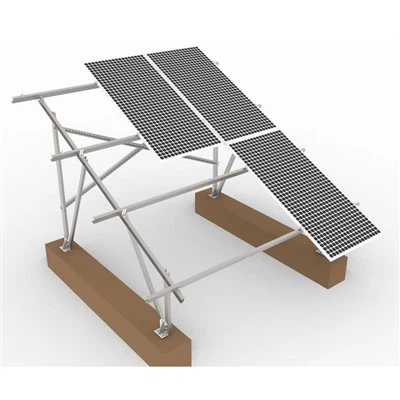
A fixed-tilt system securely mounts solar panels at a stationary, pre-set angle and direction. Typically oriented towards the south (in the Northern Hemisphere), this setup is designed to maximize sun exposure without moving parts. Its simplicity makes it a cost-effective, durable, and low-maintenance choice, especially favored in large-scale commercial and utility solar projects where long-term reliability and straightforward economics are priorities.
Determining the Optimal Angle
The energy output of a fixed-tilt array is highly dependent on its tilt angle, which should be optimized for your specific location. The primary factor is geographic latitude. A common rule of thumb is to set the angle equal to the site's latitude. For instance, at around 40°N latitude, an angle close to 40° is often effective for year-round production.
Seasonal adjustments can further fine-tune performance. In winter, when the sun is lower in the sky, a steeper angle (latitude + 10°-15°) helps capture more sunlight. Conversely, a flatter angle (latitude - 10°-15°) can be beneficial during the high summer sun. For precise optimization, consulting with a solar design professional is recommended, as local weather patterns and specific project goals also play a role.

Fixed-Tilt vs. Tracking Systems: A Practical Comparison
While single-axis trackers that follow the sun's path can increase energy yield, fixed-tilt systems offer distinct advantages in many scenarios:
Cost & Simplicity: Fixed-tilt systems have significantly lower upfront costs and minimal ongoing maintenance due to their lack of motors, gears, and complex controls.
Durability & Reliability: With fewer mechanical components, they are generally more robust against harsh weather and have a lower risk of failure.
Site Versatility: They are ideal for sites with uneven terrain, space constraints, or obstacles that complicate tracker installation. They perform reliably across diverse geographies, including cloudy regions where the incremental gain from tracking may not justify the added cost.
For many projects, the levelized cost of energy (LCOE) of a well-angled fixed-tilt system can be very competitive, making it an excellent balance of performance and value.
Ideal Applications for Fixed-Tilt Racking
The versatility of fixed-tilt mounting allows for installation in various settings:
Rooftops: Adapted to a building's existing pitch or installed on frames over flat roofs.
Ground-Mounts: The go-to solution for large, open-area solar farms.
Carports and Canopies: Providing shade while generating power.
Sloped Terrain: Naturally conforming to hillsides, which can sometimes approximate an ideal tilt angle.
Key Advantages at a Glance
Proven Cost-Effectiveness: Lower initial investment and operational expenses.
High Reliability: Minimal moving parts translate to long service life and low maintenance.
Straightforward Installation & Design: Faster deployment and easier site adaptation.
Broad Compatibility: Works with virtually all panel types and sizes.
Proven Performance: Delivers consistent, predictable energy output over decades.

About LongsunGreen Energy
Longsun Green Energy is a leading manufacturer dedicated to designing and producing high-quality, innovative solar mounting systems for residential, commercial, and utility-scale projects worldwide.
Media Contact:
Email: amber@longsungreen.com
Website: www.longsungreen.com