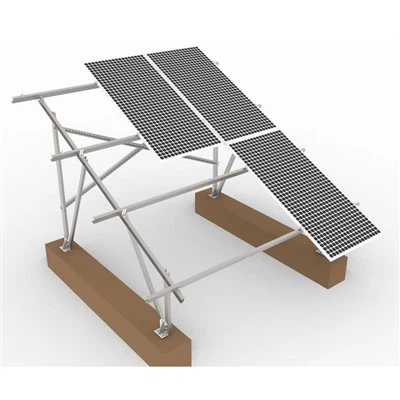


Solar energy is expanding beyond flat plains and rooftops. Increasingly, project developers are turning to mountainous areas-not only because they receive abundant sunlight, but also due to rising land constraints and policy restrictions on flat agricultural land. However, building a solar farm on a mountainside comes with unique challenges. Selecting the right mounting system is critical to project success.
This article shares practical tips on how to choose a solar mounting system specifically for hilly or mountainous terrain.
Why Mountains Are Attractive for Solar
Mountainous regions offer several advantages for PV projects:
High solar irradiation – Many mountain areas receive strong, consistent sunlight.
Low land rental costs – Compared to flat farmland, mountain land is often more affordable.
Minimal disturbance to residents – Mountains are usually far from dense urban zones.
High land utilization – Slopes that are otherwise unused can generate clean energy.
But these benefits come with significant engineering and logistical challenges.
Key Challenges of Mountainous Terrain
| Challenge | Description |
|---|---|
| Rough terrain | Steep slopes, uneven surfaces, and large elevation differences complicate construction. |
| Geological risks | Landslides, soil collapse, mountain floods, and mudslides are common. |
| Difficult access | Narrow or unpaved roads make it hard to bring in heavy machinery. |
| Mountain winds | Wind speeds and turbulence can be much higher than in open plains. |
| Vegetation & rock | Forests, dense plants, or solid rock increase clearing and foundation costs. |
| Water runoff | Heavy rain can cause erosion or foundation instability. |
Design Considerations for Mountain PV Mounting
1. Geological Disaster Prevention
Before designing the mounting system, conduct a thorough geological survey. The foundation and support structure must include:
Slope stabilization – retaining walls or soil reinforcement where needed.
Drainage systems – channels or pipes to divert rainwater away from foundations.
Erosion control – vegetation or mesh to prevent soil loss.
2. Structural Stability
In mountainous areas, the foundation must resist not only downward pressure but also uplift forces from strong winds and sloping ground. Key points:
Higher pull-out resistance than flat-land designs.
Ensure soil around the foundation remains compact and stable.
Use deeper or larger-diameter piles where necessary.
Fixed-Tilt Mounting: The Preferred Choice for Mountains
For most mountain PV projects, fixed-tilt mounting systems are recommended over tracking systems. Why?
Simpler structure – fewer moving parts, higher reliability.
Lower cost – easier to manufacture and install on uneven ground.
Better wind resistance – no actuators or motors vulnerable to mountain winds.
When designing a fixed-tilt array in mountainous terrain, the optimal angle should be determined based on:
Local monthly average irradiance (direct and diffuse components)
Historical wind speed data
Rain and snow accumulation patterns
Technical and economic comparisons

Wind Load – The Most Critical Factor
Among all loads acting on a mountain PV mounting system, wind load is often the dominant force. In many cases, wind causes more damage to mountain solar arrays than snow or seismic activity.
Practical tips for wind load management:
Obtain local basic wind pressure from the appendices of building load codes (e.g., GB50009).
If the project site is not listed, calculate wind pressure using nearby station data or Bernoulli's equation:
w₀ = ½ × ρ × v² × S
Where: ρ = air density, v = wind speed, S = windward area.
Consider adding windbreaks (e.g., perforated walls) on the windward side of the array to reduce wind load coefficients.
Install diagonal tension bars on the side and back of the support structure to improve lateral stability and reduce vibration.
Construction Characteristics for Mountain Sites
Different Geology Requires Different Foundations
Soft soil or sandy ground → Prefer spiral steel piles (fast installation, no concrete).
Rocky or hard strata → Use anchor concrete pile construction or submerged cast-in-place piles.
Match Equipment to Terrain
Flat or gently sloping areas → Use standard heavy machinery for efficiency.
Steep slopes with limited access → Use smaller, portable equipment (e.g., handheld drivers, mini excavators).
Safety During Construction
Ensure equipment stability on slopes.
Provide personnel training for mountain construction risks.
Implement lightning protection and fire prevention measures, especially in dry or forested mountain areas.
Summary: How to Choose the Right Mountain Mounting System
| Factor | Recommendation |
|---|---|
| Terrain complexity | Choose fixed-tilt systems for simplicity and reliability. |
| Wind conditions | Design for higher wind loads; consider windbreaks and diagonal bracing. |
| Geological risks | Include drainage and slope stabilization in the design. |
| Foundation type | Spiral piles for soft soil; concrete piles for rock. |
| Construction access | Large machinery for flat zones; small equipment for steep slopes. |
| Safety | Prioritize lightning, fire, and slope safety measures. |
Final Thoughts
Selecting a solar mounting system for mountainous terrain is not a one-size-fits-all decision. The ideal solution balances:
Reduced investment costs
Improved system efficiency
Long-term operational safety
The mounting structure and its foundation must adapt to complex terrain, offer adjustability for uneven surfaces, and meet all relevant technical codes and standards. With proper planning, mountains can become excellent sites for reliable, high-yield solar power generation.

Longsun Green – professional solar mounting manufacturer. We provide customized mounting solutions for challenging terrains, including mountains, water surfaces, and soft ground.
📧 Email: amber@longsungreen.com
🌐 Website: www.longsungreen.com