


Overview:
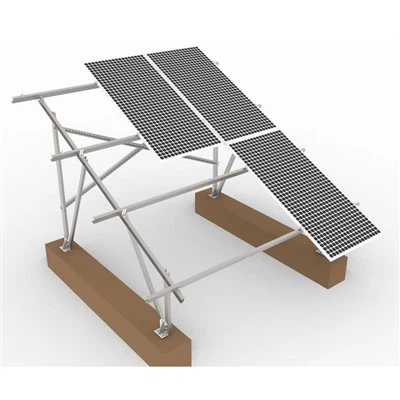
The solar racking structure concrete foundation is a vital component in a solar power installation. It serves as the stable and reliable base that supports the solar racking system, which in turn holds the solar panels. This foundation is designed to ensure the long - term stability and performance of the solar power generation system.
Purpose of Concrete Foundations
Stability: Anchors the solar racking structure to withstand environmental forces such as wind, snow, and seismic activity.
Load Distribution: Transfers the weight of solar panels, racking, and dynamic loads (e.g., wind uplift) evenly to the ground.
Durability: Resists corrosion, soil movement, and weathering over decades of operation.
Alignment: Ensures precise positioning of solar panels for optimal tilt and orientation.
2. Common Types of Concrete Foundations
a. Concrete Footings (Piers or Pads)
Design: Small, isolated blocks of concrete embedded with anchor bolts or rebar.
Use Case: Ideal for ground-mounted systems in stable soil conditions.
Advantages: Cost-effective, simple installation, minimal excavation.
b. Ballasted Foundations
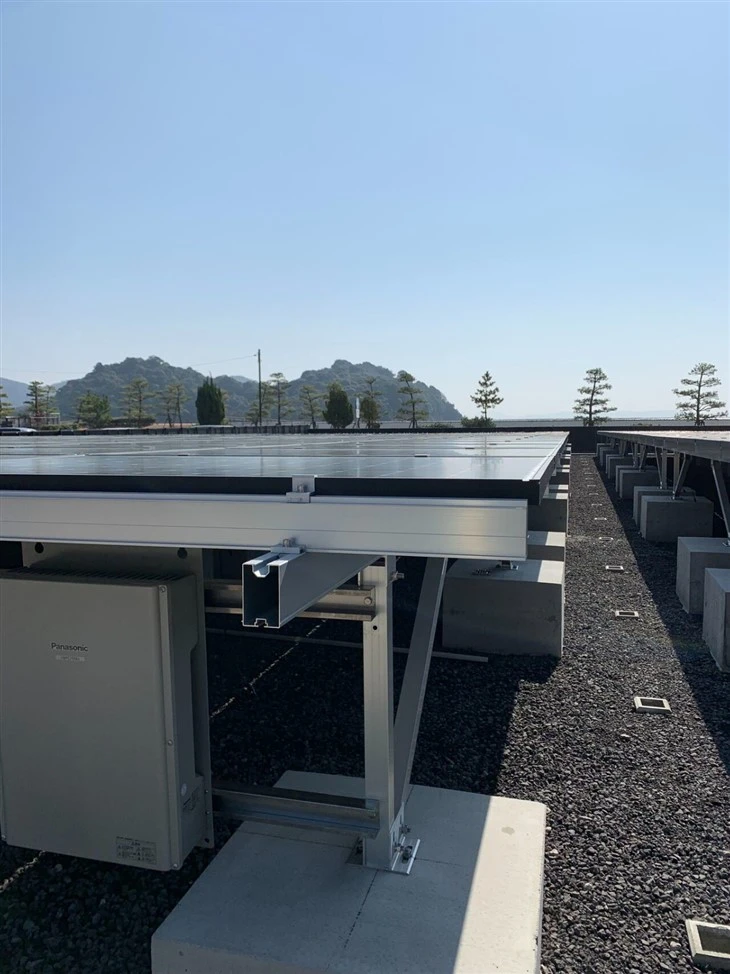
Design: Uses weighted concrete blocks (no deep excavation) to hold down racking systems.
Use Case: Suitable for flat roofs or sites where drilling is prohibited.
Advantages: Non-penetrating, preserves roof integrity; requires precise weight calculations.
c. Continuous Footings (Grade Beams)
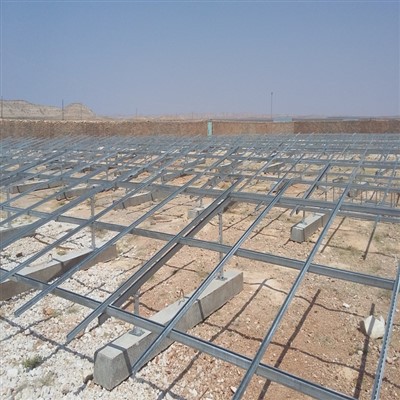
Design: Long, linear concrete strips supporting multiple racking posts.
Use Case: Large-scale solar farms or uneven terrain.
Advantages: Distributes loads across a wider area, resists soil shifting.
d. Driven Piles or Caissons
Design: Reinforced concrete columns driven deep into the ground.
Use Case: Soft or unstable soils, high-wind regions, or frost-prone areas.
Advantages: Reaches stable soil layers, minimizes frost heave risk.
3. Key Design Considerations
Soil Analysis: Soil type, bearing capacity, and frost depth determine foundation size and depth.
Load Calculations: Accounts for dead loads (panels/racking), live loads (wind/snow), and uplift forces.
Reinforcement: Steel rebar or mesh is embedded to enhance tensile strength and prevent cracking.
Environmental Factors: Corrosion-resistant materials (e.g., epoxy-coated rebar) for coastal or chemically active soils.
Local Codes: Compliance with building codes and seismic standards.
More details please contact vivi at vivian@longsungreen.com
Technical overview;

Installation overview:


Project examples:


factory loading:


Hot Tags: solar racking structure concrete foundation, China solar racking structure concrete foundation suppliers, factory, solar ground mounting lake, solar ground mounting security, solar ground mounting installation, ground mounting mast, ground mounting washer, high quality ground mounting structure